Summary

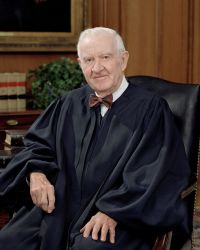
Portrait of John Paul Stevens John Paul Stevens Presley v. Etowah County Commission…

There is no evidence that the prevailing practice imposed any special burden on covered jurisdictions. For example, in this fiscal year the Attorney General has processed over 17,000 preclearance requests, and has approved over 99 percent of them without any undue delay. [6] It is, therefore, simply hyperbole for the Court to suggest that if we adopted the Attorney General's position in this case "neither state nor local governments could exercise power in a responsible manner within a federal system."
Source: Wikisource

Portrait of John Paul Stevens John Paul Stevens Presley v. Etowah County Commission…

The District Court mistakenly blurred the distinction between whether a change is subject to preclearance, which turns on whether the change has the potential for discrimination, and whether the change should, in fact, be precleared, which turns on whether the change would have a discriminatory purpose or effect. The distinction is important because " [t] he discriminatory potential in seemingly innocent or insignificant changes can only be determined after the specific facts of the change are analyzed in context.
Source: Wikisource

Portrait of John Paul Stevens John Paul Stevens Presley v. Etowah County Commission…

The Court's construction of the Act in Allen, as requiring preclearance of changes in covered jurisdictions that were responsive to the increase in the number of black registered voters, [14] was consistent with the concern that justified the extraordinary remedy set forth in § 5 itself, particularly the concern that recalcitrant white majorities could be expected to devise new stratagems to maintain their political power if not closely scrutinized.
Source: Wikisource

Get perspective with Kwize: daily news enlightened by great literature