Summary

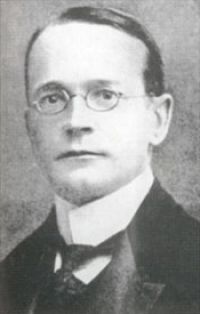
Portrait of Joseph McCabe Joseph McCabe The Human Origin of Morals — Chapter I. Theories of Moral Law

No one will question that a number of brilliant writers are anti-moralists, while most writers represent moral law as the supreme reality, the foundation of social life; the starry heavens above our head, as Kant said, the granite substratum under the soil of our cities, as Emerson said. And if any do not know the mysticism with which philosophers veil the moral law, or the ease with which science explains it, he will soon be informed.
Source: Wikisource

Portrait of Joseph McCabe Joseph McCabe The Human Origin of Morals — Chapter I. Theories of Moral Law

There are few facts of human life which have been so deeply woven into the web of religious thought as what are called a man's moral and immoral actions; and there are none which have so little real connection with religion.
There is no other element of our decaying religions which has been so reverently clothed by modern philosophers with a mantle of mysticism; and there is none which evolutionary science explains more clearly.
Source: Wikisource

Portrait of Joseph McCabe Joseph McCabe The Human Origin of Morals — Chapter I. Theories of Moral Law

Moral law was another kind of thunder, and, being "spiritual," it remained a sort of supernatural phenomenon even when man became fully civilized. Until modern times it was quite unintelligible. There was the law, no one knew why, no one knew whence. It was written in every man's conscience. A strange thing, this, and philosophers set to work on it.
Philosophers never believe in revelation, and they do not love science. They were quite pleased when science began to explain the order of the heavens, the beauty of the rose or of the sunset, and the adaptations of organs.
Source: Wikisource

Get perspective with Kwize: daily news enlightened by great literature