Summary

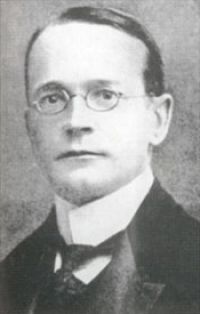
Portrait of Joseph McCabe Joseph McCabe The Human Origin of Morals — Chapter II. Evolution and Morals

Why is justice the fundamental and essential moral law? It is a vital regulation of social life. Why is murder the greatest crime? It is the gravest social delinquency. And so on. It would be a remarkable coincidence if this mystic law of the philosophers and the theologians, existing before man existed, and surviving when he disappears, just happened to agree so well with the social interests of the observers of the law themselves!
Source: Wikisource

Portrait of Joseph McCabe Joseph McCabe The Human Origin of Morals — Chapter II. Evolution and Morals

We shall not at all expect the steady evolution of social law in harmony with social interests as we know them today. Moreover, superstitions, tabus, fetishisms, religions, and all kinds of uncouth ideas of what is sacred have naturally invaded and perverted man's conceptions of moral law. But through the whole confusion, chronicled in literature or embodied in the backward tribes of today, we plainly trace the faltering rise of that human rule of conduct which philosophers, never looking back upon its humble origins, have mistaken for an eternal and superhuman reality.
Source: Wikisource

Portrait of Joseph McCabe Joseph McCabe The Human Origin of Morals — Chapter II. Evolution and Morals

I am going to differ a little from Professor Westermarck's theory, as I told him, but the way in which he brings together all the facts about men's moral ideas is the only way to get a sound theory of morality.
All the fine theories of the philosophers break down before this vast collection of facts. There is no intuition whatever of an august and eternal law; and the less God is brought into connection with these pitiful blunders and often monstrous perversions of the moral sense the better.
Source: Wikisource

Get perspective with Kwize: daily news enlightened by great literature