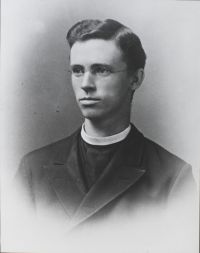
Timothy Brosnahan

Timothy Brosnahan

Summary

Portrait of Timothy Brosnahan Timothy Brosnahan Catholic Encyclopedia (1913)

The conflict between self-love and benevolence, which is inevitable in all systems that determine the morality of an act by its relations to an agreeable psychological state, need not arise in systems that make the ethical norm of action objective; the ethically desirable and the psychologically desirable are not identified. Catholic ethics does not deny that happiness of some kind is the necessary consequence of good conduct, or that the desire to attain or confer it is lawful; but it does deny that the pursuit of it for its own sake is the ultimate aim of conduct.
Source: Wikisource

Portrait of Timothy Brosnahan Timothy Brosnahan Catholic Encyclopedia (1913)

The conflict between egoism and altruism is not to be removed by giving preponderance to either, since pure egoism and pure altruism are both fatal to society; but by compromise of their respective claims such that the final result will be general altruism, as distinguished from the altruism that ministers to the egoistic satisfaction of others only, whether these others be individuals, or the community impersonally conceived.
Source: Wikisource

Portrait of Timothy Brosnahan Timothy Brosnahan Catholic Encyclopedia (1913)

Catholic ethics reconciles self-love and benevolence by subordinating both to the supreme purpose of creation and the providential ends of the Creator. It teaches that acts of self-love may have a moral quality; that sacrifice of self for the good of others may sometimes be a duty, and when not a duty, may oftentimes be an act of virtue.
Source: Wikisource

Get perspective with Kwize: daily news enlightened by great literature