Summary

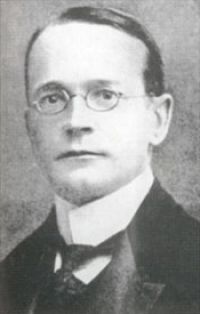
Portrait of Joseph McCabe Joseph McCabe,  Twelve Years in a Monastery — Chapter IV. Studentship

“ Then the ages of the students must be taken into account; they are generally youths of from eighteen to twenty-one who are quite incapable of entering into such grave problems seriously, and only one in a hundred makes any attempt to do so. Sufficient information is committed to memory to satisfy an examiner; but, unless the student is drawn to the science for a solution of questions that have arisen in his own soul (which is rarely the case) , he shirks philosophy to the utmost of his power, and looks forward eagerly to his deliverance from it. ”
Source: Wikisource

Portrait of Joseph McCabe Joseph McCabe,  Twelve Years in a Monastery — Chapter IV. Studentship

“ John Duns Scotus, the celebrated English friar, followed Aristotle’s example more closely, and wrote many distinct treatises on logic and metaphysics. By the sixteenth century, when there was a conspicuous revival of speculative activity, the separation of philosophy from theology was complete. In our own logical and Rationalistic age such a separation is imperative. Before a positive revelation can be entertained certain preliminaries, notably the existence, nature, and authority of the Revealer, must necessarily be established by pure reasoning; hence philosophy must precede theology. ”
Source: Wikisource

Portrait of Joseph McCabe Joseph McCabe,  Twelve Years in a Monastery — Chapter IV. Studentship

“ At Cambridge, the programme of philosophical authors is so delightfully impartial that few students find themselves in possession of definite philosophical views after reading it; in every seminary and monastic college the impression made upon the student is that the scholastic system is so clearly and uniquely true that all opponents are either feeble-minded or dishonest—usually the latter alternative is urged. ”
Source: Wikisource

Get perspective with Kwize: daily news enlightened by great literature