“ Nor if a man shall write, like me, things nigh to prose akin, Shall he, however well he write, the name of poet win? To genius, to the man-whose soul is touched with fire divine, Whose voice speaks like a trumpet-note, that honoured name assign. 'Tis not enough that you compose your verse In diction irreproachable, pure, scholarly, and terse, Which, dislocate its cadence, by anybody may Be spoken like the language of the father in the play. ”
Quotes about “littérateur”
 John Henry Newman,
The Idea of a University Defined and Illustrated
John Henry Newman,
The Idea of a University Defined and Illustrated
“ And the Art of Letters is the method by which a speaker or writer brings out in words, worthy of his subject, and sufficient for his audience or readers, the thoughts which impress him. Literature, then, is of a personal character; it consists in the enunciations and teachings of those who have a right to speak as representatives of their kind, and in whose words their brethren find an interpretation of their own sentiments, a record of their own experience, and a suggestion for their own judgments. ”
W. F. Webster, English: Composition and Literature
“ Not in literature alone, but in business,—in medicine, in law, behind the accountant’s desk or the salesman’s counter,—he is master who can say what he means so that the person to whom he speaks must know just what he means. Now it is a singular truth that when we read any great author, the words which we do not understand are remarkably few. Even in Shakespeare there are not many; and the few are unknown by reason of a constantly changing vocabulary. ”
F. V. N. Painter, Elementary Guide to Literary Criticism
“ These principles pertain to diction, structure, matter, and spirit or purpose. No one will deny [4] that the diction should be well chosen; that the structure of the sentences should be correct and clear; and that, in the case of poetry, the laws of versification should be observed. These elements contribute to excellence of form. In addition to these external elements there should be unity of thought, symmetry of presentation, truth of statement, and sincerity and self-restraint in sentiment. These elements give substantial worth to the matter or content of literature. ”
 Ben Jonson,
Discoveries Made Upon Men and Matter and Some Poems
Ben Jonson,
Discoveries Made Upon Men and Matter and Some Poems
“ But before we handle the kinds of poems, with their special differences, or make court to the art itself, as a mistress, I would lead you to the knowledge of our poet by a perfect information what he is or should be by nature, by exercise, by imitation, by study, and so bring him down through the disciplines of grammar, logic, rhetoric, and the ethics, adding somewhat out of all, peculiar to himself, and worthy of your admittance or reception. ”
Charles A. McMurry, Special Method in the Reading of Complete English Classics
“ They are persons hemmed in by the close environment of facts.This realism, this objectifying of thought, this living form of knowledge, is characteristic of all great [Pg 193] writers in prose or verse. The novelist, the romancer, the poet, the orator, and even the essayist, will always put the breath of reality into his work by an infusion of concreteness, of graphic personification. The poet's fancy, building out of the abundant materials of sense-experience, is what gives color and warmth to all his thoughts. Strong writers make incessant use of figures of speech. ”
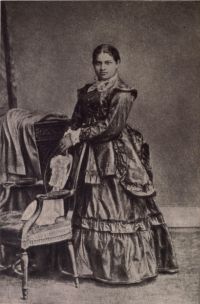 Toru Dutt,
A Sheaf Gleaned in French Fields
(1880)
Toru Dutt,
A Sheaf Gleaned in French Fields
(1880)
“ And of this fact he himself was aware, for he said, 'The poet in me—shall I confess it?—has sometimes suffered from all the indulgences even accorded to the prose writer.' Poet, critic, and romance writen, it is difficult for any man to be all three with impunity, and to succeed equally well in all. ”
 Mortimer Adler,
What Is Basic about English?
(1941)
Mortimer Adler,
What Is Basic about English?
(1941)
“ Second, the results of separating rhetoric from grammar and from logic. Here I do not speak of the separation of rhetoric from poetics, for the opposite has taken place: in so far as rhetoric is not just public speaking, it is reduced to a concern about poetic style.1. Let me begin, therefore, by commenting briefly on the notion of style. Style is the most general rhetorical fact. But as treated by teachers of English, style is restricted to the consideration of poetic excellence: to effectiveness in the field of imaginative literature. ”
 Edmund Gosse,
Some Diversions of a Man of Letters
Edmund Gosse,
Some Diversions of a Man of Letters
“ But no subject of any importance in literature is ever exhausted, because the products of literature grow or decay, burgeon or wither, as the generations of men apply their ever-varying organs of perception to them. I intend, with your permission, to present to you a familiar phase of the literary life of the eighteenth century from a fresh point of view, and in relation to two men whose surname warrants a peculiar emphasis of respect in the mouth of a Warton Lecturer. ”
Henry Cabot Lodge, The Cambridge History of American Literature (1917)
“ But we also find in this address something more, the purely literary quality in the style and in the thought. § 6. Rhetoric and Literature. It is this literary quality which concerns us here, and to appreciate it we must mark the distinction, often a very narrow one, between the rhetorical and the literary. Rhetoric is of course in its place a branch of literature, but it may be of the utmost excellence and yet lack the highest literary quality. Rhetoric is out of place in purely literary work which is not dramatic in character. ”
 Charles Kingsley,
Literary and General Lectures and Essays
Charles Kingsley,
Literary and General Lectures and Essays
“ Now as in the nation, so in the individual, poetry springs up before prose. Look at the history of English literature, how completely it is the history of our own childhood and adolescence, in its successive fashions. ”
F. V. N. Painter, Elementary Guide to Literary Criticism
“ It is distinguished from poetry not only by more commonplace thought but also by the absence of regular metrical structure. Prose and poetry together constitute the great body of literature; but at the present time, which is characterized by the predominance of material and commercial interests, prose forms by far the larger part. In our popular magazines, poetry is relegated to a very subordinate place.The forms of prose are various. They may be approximately classified under history, essays, oratory, fiction, science, philosophy, and epistolary correspondence. ”
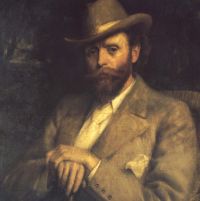 Sir Hall Caine,
Recollections of Dante Gabriel Rossetti
Sir Hall Caine,
Recollections of Dante Gabriel Rossetti
“ Among many frank utterances of an opinion early formed, that whatever my potentialities as a writer of prose, I had but small vocation as a writer of poetry, I preserve one such utterance, which will, I trust, be found not less interesting to other readers from affording a glimpse of the writer’s attitude towards the old controversy touching the several and distinguishing elements that contribute to make good prose on the one hand and good verse on the other. ”
Walton Burgess, Five Hundred Mistakes of Daily Occurrence in Speaking…
“ The dignity and objects of literature are distinctly brought to view, whether in the form of prose to persuade and instruct—in that of poetry, to please the fancy—or in that of the drama, to move the passions. ”
Lewis E. Gates, Three studies in literature (1899)
“ The superior character of truth and seriousness, in the matter and substance of the best poetry, is inseparable from the superiority of diction and movement marking its style and manner. The two superiorities are closely related, and are in steadfast proportion one to the other. So far as high poetic truth and seriousness are wanting to a poet’s matter and substance, so far also, we may be sure, will a high poetic stamp of diction and movement be wanting to his style and manner. ”
F. V. N. Painter, Elementary Guide to Literary Criticism
“ It is thus evident that the interest and worth of literature depend largely on the manner in which the thought and emotion are expressed. In general the matter of discourse, which aims at the communication of ideas, is of more importance than the form. Words without thought, no matter how skillfully and musically they may be arranged, are nonsense. But in the lighter sorts of prose, which aim at entertainment, and in poetry, which is dependent on meter and harmony, form is of preëminent importance. ”
 Laurence Sterne,
The Life and Opinions of Tristram Shandy…
(1759)
Laurence Sterne,
The Life and Opinions of Tristram Shandy…
(1759)
“ You see as plain as can be, that I write as a man of erudition;—that even my similies, my allusions, my illustrations, my metaphors, are erudite,—and that I must sustain my character properly, and contrast it properly too,—else what would become of me? ”
 William Wordsworth,
The Prose Works of William Wordsworth
William Wordsworth,
The Prose Works of William Wordsworth
“ If in a poem there should be found a series of lines, or even a single line, in which the language, though naturally arranged, and according to the strict laws of metre, does not differ from that of prose, there is a numerous class of critics, who, when they stumble upon these prosaisms, as they call them, imagine that they have made a notable discovery, and exult over the Poet as over a man ignorant of his own profession. ”
Oliver Wendell Holmes, The Poet at the Breakfast-Table
“ I have taken the inventory of my faculties as calmly as if I were an appraiser. I have some of the qualities, perhaps I may say many of the qualities, that make a man a poet, and yet I am not one. And in the course of a pretty wide experience of men—and women— (the Master sighed, I thought, but perhaps I was mistaken) —I have met a good many poets who were not rhymesters and a good many rhymesters who were not poets. ”
 Laura Marholm,
Six modern women: Psychological sketches
(1896)
Laura Marholm,
Six modern women: Psychological sketches
(1896)
“ When they write their books, they write the history of their inner life. You open a book and you read twenty lines, and in the tone and character of those twenty lines you seem to feel the beating of the writer’s pulse. ”
F. V. N. Painter, Elementary Guide to Literary Criticism
“ In three chapters it briefly discusses the diction, the various kinds of sentences, the use of figures of speech, and the different species of style as determined partly by the nature of the discourse [iv] and partly by the mental endowments of the writer. It is intended to embrace the rhetorical elements of form.In Part Third the leading kinds of literature are discussed, and the general principles governing each are presented. Special effort has been made to throw light upon the nature and structure of poetry, fiction, and the drama ”
 John Cowper Powys,
One Hundred Best Books
John Cowper Powys,
One Hundred Best Books
“ His mastery of language, his knowledge of human impulses, his interpretation of the forces of nature and of the power of inanimate objects over human beings, all pronounce him a writer of no mean rank.... He can express philosophy in terms of narrative without prostituting his art; he can suggest an answer without drawing a moral; with a clearer vision he could stand among the masters in literary achievement. ”
Wiltshire Stanton Austin, The Lives of the Poets-Laureate (1853)
“ The object of our less ambitious history is to give to the general reader, as simply and briefly as we can, such incidents in the poet's career as seem to us authentic, and such criticism on his character and writings as our knowledge of both may suggest. ”
William Wordsworth,
The Prose Works of William Wordsworth
“ But whatever portion of this faculty we may suppose even the greatest Poet to possess, there cannot be a doubt that the language which it will suggest to him, must often, in liveliness and truth, fall short of that which is uttered by men in real life, under the actual pressure of those passions, certain shadows of which the Poet thus produces, or feels to be produced, in himself. ”
 Henry Osborn Taylor,
The Mediaeval Mind
(1911)
Henry Osborn Taylor,
The Mediaeval Mind
(1911)
“ This literature proper was likely to take the form of verse in the eleventh century. A practical matter would be put in prose; but the effervescence of the soul, or the intended literary effort, would fall into rhyme or resort to metre. ”
 Israel Zangwill,
Without Prejudice
Israel Zangwill,
Without Prejudice
“ Why not study the peculiarities of the novelist who studies the novelist, of the reflector of life who reflects the reflector of life—nay, of the critic who reflects upon the reflection of the reflector? ”
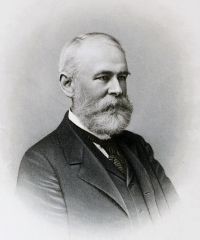 George Lansing Raymond,
Ballads and Other Poems
(1886)
George Lansing Raymond,
Ballads and Other Poems
(1886)
“ Books by Professor RaymondPoetry as a Representative Art. 8o $1.75This book is an attempt, in accordance with modern methods, aided by the results of modern investigation, to determine scientifically the laws of poetic composition and criticism, by deriving and distinguishing the methods and meanings of the various factors of poetic form and thought from those of the elocution and rhetoric of ordinary speech, of which poetry is an artistic development. The principles unfolded are illustrated by quotations from the first English poets. ”
 Theodore Watts-Dunton,
Old Familiar Faces
Theodore Watts-Dunton,
Old Familiar Faces
“ And here we touch upon an extremely interesting subject.p. 271Always in reading a prose story by a writer whose energies have been exercised in other departments of letters there is for the critic a special interest. If this exercise has been in fields outside imaginative literature—in those fields of philosophical speculation where a logical method and a scientific modulation of sentences are required—the novelist, instead of presenting us with those concrete pictures of human life demanded in all imaginative art, is apt to give us disquisitions “about and about” human life. ”
Benj. N. Martin, Choice Specimens of American Literature…
“ Under their authority we see introduced into literary work an habitual grace and perfection, a clearness and directness, a light and pliable strength, and a fine shading of expression, such as no other tongue can even define. We see the same high standard in their criticism, in their works of research, in the Revue des Deux Mondes, and in short throughout literature. ”
William Wordsworth,
Preface to The Lyrical Ballads
“ To this in the first place I reply, because, however I may have restricted myself, there is still left open to me what confessedly constitutes the most valuable object of all writing whether in prose or verse, the great and universal passions of men, the most general and interesting of their occupations, and the entire world of nature, from which I am at liberty to supply myself with endless combinations of forms and imagery. ”
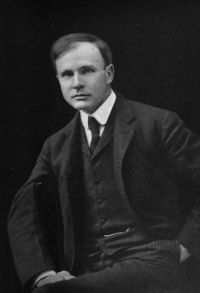 Bliss Perry,
A Study of Poetry
Bliss Perry,
A Study of Poetry
“ Eisner. "I wish our clever young poets would remember my homely definitions of prose and poetry; that is, prose = words in their best order;—poetry = the best words in the best order." COLERIDGE, Table Talk.1. The Eye and the Ear"Literary" language is commonly distinguished from the language of ordinary life by certain heightenings or suppressions. The novelist or essayist, let us say, fashions his language more or less in accordance with his own mood, with his immediate aim in writing, with the capacity of his expected readers. ”
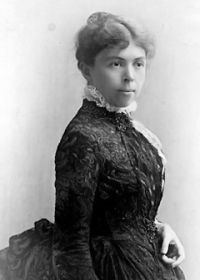 Alice Freeman Palmer,
Why Go to College? An Address
Alice Freeman Palmer,
Why Go to College? An Address
“ Possibly a denominational religious weekly and another journal of fashion or business. Then come the thousands who read the best magazines, and whatever else is for the moment popular in novels and poetry—the last dialect story, the fashionable poem, the questionable but talked-of novel. Let a violent attack be made on the decency of a new story and instantly, if only it is clever, its author becomes famous. ”
 Charles Baudelaire,
Baudelaire: His Prose and Poetry
Charles Baudelaire,
Baudelaire: His Prose and Poetry
“ Always to be a poet, even in prose. ”
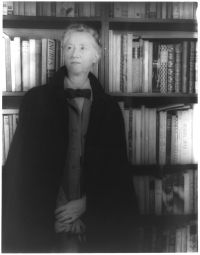
“ In the meantime, if you demand on one hand, in defiance of their opinion— the raw material of poetry in all its rawness and that which is, on the other hand, genuine then you are interested in poetry. ”
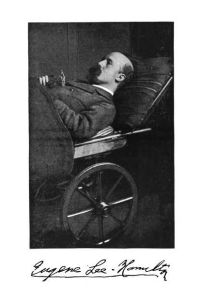 Eugene Lee-Hamilton,
Apollo and Marsyas, and Other Poems
(1884)
Eugene Lee-Hamilton,
Apollo and Marsyas, and Other Poems
(1884)
“ There is in the lines quoted a directness of speech due partly to the situation of the writer and partly to the rare gift which, above all others, makes a man a poet—a gift of truthful and sincere utterance. ”
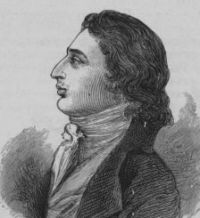 Robert Southey,
Sir Thomas More, or, Colloquies on the Progress and Prospects of Society
Robert Southey,
Sir Thomas More, or, Colloquies on the Progress and Prospects of Society
“ Writing also under the excitement of emulation and rivalry, they seek, by all the artifices and efforts of an ambitious style, to dazzle their readers; and they are wise in their generation, experience having shown that common minds are taken by glittering faults, both in prose and verse, as larks are with looking-glasses. ”
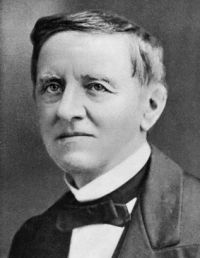 Samuel J. Tilden,
Letters and Literary Memorials of Samuel J. Tilden…
Samuel J. Tilden,
Letters and Literary Memorials of Samuel J. Tilden…
“ He recognized the importance of the art of rhetoric, and labored upon the composition of his papers with the same care which the purely literary man employs; not for the purpose of making up a piece of what is called fine writing, but to engage and hold the attention by imparting life and interest to his treatment, and, by an easy and natural development of his subject, to carry the mind gratefully along towards his conclusions. ”
Various, Popular Science Monthly (1886)
“ The shifting position of novelists in our three scales is, perhaps, the most curious outcome of our investigation. Like the poet, the novelist employs as his chief mental implement the faculty of sensuous imagination. ”
Bliss Perry,
The Harvard Classics Vol. 51
(1914)
“ The discussions which have really caught the ear of the public have been the casual utterances of brilliant men in the act of attacking or defending a literary creed, of writing a preface to a book or a play, or of hazarding, in some dialogue, pamphlet, or essay, a new opinion about beauty, a new theory of poetry or of prose. ”
