Summary

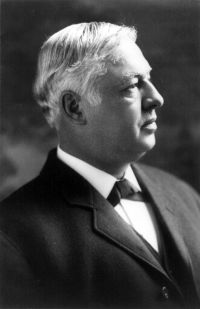
Portrait of Joseph Rucker Lamar Joseph Rucker Lamar Smith v. Texas (233 U.S. 630)…

The engineer is constantly with the train and knows all of the signals, knows how the couplings are made, knows how the cars are switched and distributed, and knows how they are taken into the train and transported from one place to another. An engineer is so constantly associated with all the work of a conductor on a freight train that he should know as much about how a freight train should be operated by a conductor as the conductor himself.
Source: Wikisource

Portrait of Joseph Rucker Lamar Joseph Rucker Lamar Smith v. Texas (233 U.S. 630)…

The liberty of contract is, of course, not unlimited; but there is no reason or authority for the proposition that conditions may be imposed by statute which will admit some who are competent and arbitrarily exclude others who are equally competent to labor on terms mutually satisfactory to employer and employee. None of the cases sustains the proposition that, under the power to secure the public safety, a privileged class can be created and be then given a monopoly of the right to work in a special or favored position.
Source: Wikisource

Portrait of Joseph Rucker Lamar Joseph Rucker Lamar Smith v. Texas (233 U.S. 630)…

So that the case distinctly raises the question as to whether a statute, in permitting certain competent men to serve, can lay down a test which absolutely prohibits other competent men from entering the same private employment. It would seem that to ask the question is to answer,-and the answer in no way denies the right of the state to require examinations to test the fitness and capacity of brakemen, firemen, engineers, and conductors to enter upon a service fraught with so much of risk to themselves and to the public.
Source: Wikisource

Get perspective with Kwize: daily news enlightened by great literature