Summary

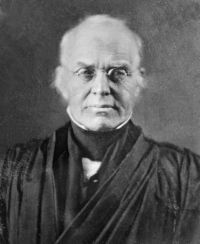
Portrait of Joseph Story Joseph Story Martin v. Mott — Opinion of the Court

Is the President the sole and exclusive judge whether the exigency has arisen, or is it to be considered as an open question, upon which every officer to whom the orders of the President are addressed, may decide for himself, and equally open to be contested by every militia-man who shall refuse to obey the orders of the President? We are all of opinion, that the authority to decide whether the exigency has arisen, belongs exclusively to the President, and that his decision is conclusive upon all other persons.
Source: Wikisource

Portrait of Joseph Story Joseph Story Martin v. Mott — Opinion of the Court

A free people are naturally jealous of the exercise of military power; and the power to call the militia into actual service is certainly felt to be one of no ordinary magnitude. But it is not a power which can be executed without a correspondent responsibility. It is, in its terms, a limited power, confined to cases of actual invasion, or of imminent danger of invasion. If it be a limited power, the question arises, by whom is the exigency to be judged of and decided?
Source: Wikisource

Portrait of Joseph Story Joseph Story Martin v. Mott — Opinion of the Court

It is not, therefore, admitted, that any express authority is given by either statute, that such a Court Martial as is contemplated for the trial of delinquents under the 5th section of the act of 1795, is to be composed of the same number of officers, organized in the same manner as these rules and articles contemplate for persons in actual service. If any resort is to be had to them, it can only be to guide the discretion of the officer ordering the Court, as matter of usage, and not as matter of positive institution.
Source: Wikisource

Get perspective with Kwize: daily news enlightened by great literature