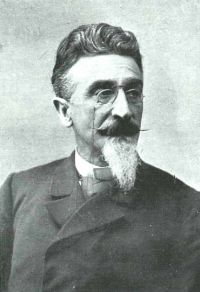
José María de Pereda

José María de Pereda

Summary

Portrait of José María de Pereda José María de Pereda To the Indies (1864)

The three are walking along without saying a word,—Uncle Nardo with the greatest possible indifference, his wife, as usual, in the depths of sorrow, looking through her tears at the fateful ship which waits for her boy, rocking out there on the waves, a mile from the Mole. As for Andrew, to judge by his determined air and his disdainful smile, we may rest assured he is cherishing a plan for building up on his own hook, when he should come back from America, a suburb as elegant and solid as the one through which they are passing.
Source: Wikisource

Portrait of José María de Pereda José María de Pereda To the Indies (1864)

Wishing to cut short the scene, that he may sadden his son the less, he presses him silently to his heart, then turns brusquely to his wife and enters the boat with her, imposing upon himself the hard penance of never so much as looking at the frigate until they reach the Mole.
When they land there, Aunt Nisca seats herself in the first doorway they reach. With her elbows on her knees, her head in her hands, her eyes fixed on the ship, and her face wet with tears, she waits there motionless, like a statue of grief, till the black hulk shall disappear.
Source: Wikisource

Portrait of José María de Pereda José María de Pereda To the Indies (1864)

A gentleman who came back to the place loaded with money-bags,—who has made ladies and gentlemen of all his relations,—who no sooner learns his neighbor's need than he goes to help him,—who single-handed bears almost all the taxes of the village, and who puts an end to all lawsuits, that Justice may not absorb the rights of the one who wins nor the property of the other side, and in return for all this bounty asks only the blessing of honest men. What greater satisfaction could one ask than to see our son some day as highly esteemed as Don Damian?
Source: Wikisource

Get perspective with Kwize: daily news enlightened by great literature