Summary

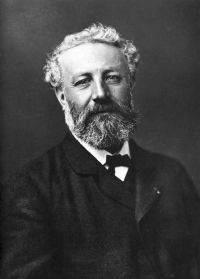
Portrait of Jules Verne Jules Verne Hector Servadac (Frewer translation… (1906)

Strange to say, little Nina bore her hardships more bravely than any of them. Flitting about, coaxing one to eat, another to drink, rousing Pablo as often as he seemed yielding to the common langour, the child became the life of the party. Her merry prattle enlivened the gloom of the grim cavern like the sweet notes of a bird; her gay Italian songs broke the monotony of the depressing silence; and almost unconscious as the half-dormant population of Gallia were of her influence, they still would have missed her bright presence sorely.
Source: Wikisource

Portrait of Jules Verne Jules Verne Hector Servadac (Frewer translation… (1906)

The silence of bewilderment was broken at length by Count Timascheff making inquiry whether nothing had been heard from England, either by telegraph or by any passing ship.
“No,” said the colonel; “not a ship has passed; and the cable is broken.”
“But do not the Italian telegraphs assist you?” continued the count.
“Italian! I do not comprehend you. You must mean the Spanish, surely.”
“How?” demanded Timascheff.
“Confound it!” cried the impatient Servadac. “What matters whether it be Spanish or Italian? Tell us, have you had no communication at all from Europe?—no news of any sort from London?”
Source: Wikisource

Portrait of Jules Verne Jules Verne Hector Servadac (Frewer translation… (1906)

Isaac Hakkabut, immovable from the personal oversight sight of his property in the cavern, had not accompanied the party, and consequently was in blissful ignorance of the fate that threatened his vessel.
“A good thing the old fellow wasn't there to see,” observed Ben Zoof; “he would have screamed like a peacock. What a misfortune it is,” he added, speaking to himself, “to have a peacock's voice, without its plumage!”
Source: Wikisource

Get perspective with Kwize: daily news enlightened by great literature