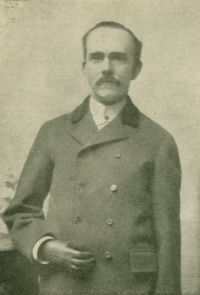
Julius A. Palmer Jr.

Julius A. Palmer Jr.

Summary

Portrait of Julius A. Palmer Jr. Julius A. Palmer Jr. Popular Science Monthly (1877)

You might as well call a beet a "vegetable," and every other representative, from the garden a "plant," as to consider one fungus a "mushroom," and all others of a thousand species "toadstools."
Yet, people cannot be blamed for ignorance where there are so few sources of information. The difficulties experienced by the amateur can scarcely be overrated.
Source: Wikisource

Portrait of Julius A. Palmer Jr. Julius A. Palmer Jr. Popular Science Monthly (1877)

Those that have a very thin cap, or the stem growing from the side instead of the middle, should be avoided. All milky mushrooms, with the single exception of the orange milk-mushroom, are extremely dangerous. So also are those which have the gills of equal length, those which run speedily into a dark, watery liquid, which taste bitter or burn the mouth, or have a fetid, sickly smell. If a mushroom turns a variety of colors when bruised, or is marked by the trail of a snail, it can under no circumstances be eaten.
Source: Wikisource

Portrait of Julius A. Palmer Jr. Julius A. Palmer Jr. Popular Science Monthly (1877)

By far the majority are best broiled on a fine-wire gridiron. They should be sprinkled with salt and (if the species is well known as an esculent) red pepper, buttered as the fire browns them. Otherwise, stew them in milk, exactly as you would make an oyster-stew. The elm-tree mushroom, the honey-colored mushroom, and any others tasting raw of grass or trees, are only good broiled. The meadow-mushroom, horse-mushroom, or coprinus, are excellent cooked either way. There is no doubt of the wholesome character of esculent fungus. During the season, we eat them at our table three times a day
Source: Wikisource

Get perspective with Kwize: daily news enlightened by great literature