Summary

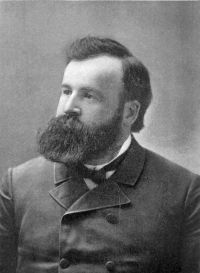
Portrait of W. Hamilton Gibson W. Hamilton Gibson Our Edible Toadstools and Mushrooms and How to Distinguish Them

Identification of fatal species But when we realize the fact—now generally conceded—that most of the fatalities consequent upon mushroom-eating are directly traceable to one particular tempting group of fungi, and that this group is moreover so distinctly marked that a tyro could learn to distinguish it, might not such a popular work, in its emphasis by careful portraiture and pictorial analysis of this deadly genus—placarding it so clearly and unmistakably as to make it readily recognizable—might not such a work, to that extent at least, accomplish a public service?
Source: Gutenberg

Portrait of W. Hamilton Gibson W. Hamilton Gibson Our Edible Toadstools and Mushrooms and How to Distinguish Them

There is but one safe, as it is a simple, rule for him: He should taste every specimen of his Russula of whatever kind before venturing upon its use as food. All of the sweet and palatable Russulæ are esculent. When he chances upon the R. emetica he will be aware of its important demoralizing resources in the peppery-hot tingle of his tongue, which, if not instantly perceived, will within the space of a minute assert itself distinctly.
Source: Gutenberg

Portrait of W. Hamilton Gibson W. Hamilton Gibson Our Edible Toadstools and Mushrooms and How to Distinguish Them

It bursts at the summit, and sheds its puff of microscopic spores, so light as to be without gravity, floating and settling everywhere upon the earth, but only as they chance to alight upon the spines of a dead chestnut-burr of two years' decay will they find heart to grow. Such is the fastidiousness of the little white mushroom, whose globular caps dot the spines of the decaying chestnut-burrs in so many damp nooks in the woods.
Source: Gutenberg

Get perspective with Kwize: daily news enlightened by great literature