Mycology

Definition and stakes

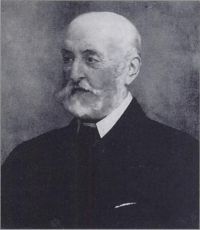
Portrait of W. Hamilton Gibson W. Hamilton Gibson Our Edible Toadstools and Mushrooms and How to Distinguish Them

Conservative mycology Moreover, even the most conservative mycologist will certainly admit that out of the hundred and fifty of our admittedly esculent species of fungi there might be segregated a few which bear such conspicuous characters of outward form and other unique individual features—such as color of spores, gills, and tubes, taste, odor, surface character, color of milky juice, etc.—as to render them easily recognizable even by the "general reader."
Source: Gutenberg

Roy Watling Identification of the Larger Fungi

Mycology, therefore, offers to the beginner and the professional many opportunities in physiology and ecology.
In grassland areas it is difficult to know where to draw the line between one plant-community and another when listing species, for although ecologically distinct both would come under the name grassland. In the field, however, this is often very obvious and there is little doubt that fungi can give just as accurate an indication as to the soil-type, as many mosses or vascular plants.
Source: Gutenberg

Roy Watling Identification of the Larger Fungi

Many amateurs interested in higher fungi wish only to name their collections, or know approximately what they are before sampling them as an addition to their diet. An understanding of our commoner species at an early age will allow the ‘budding’ mycologist to tackle the much needed study of the more critical forms. Mycology is still at a descriptive stage, but it is hoped this will soon be changed and fungi of all kinds will be studied as part and parcel of courses in ecology.
Source: Gutenberg

Get perspective with Kwize: daily news enlightened by great literature