Summary

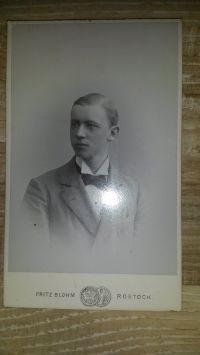
Portrait of Justus Hashagen Justus Hashagen 1911 Encyclopædia Britannica, Volume 16… (1911)

The murder of Kotzebue by Karl Sand, however, shocked him out of his extreme revolutionary views, and from this time he tended, under the influence of the writings of Hamann and Herder, more and more in the direction of conservatism and romanticism, until at last he ended, in a mood almost of pessimism, by attaching himself to the extreme right wing of the forces of reaction.
Source: Wikisource

Portrait of Justus Hashagen Justus Hashagen 1911 Encyclopædia Britannica, Volume 16… (1911)

LEO, HEINRICH (1799–1878) , German historian, was born at Rudolstadt on the 19th of March 1799, his father being chaplain to the garrison there. His family, not of Italian origin—as he himself was inclined to believe on the strength of family tradition—but established in Lower Saxony so early as the 16th century, was typical of the German upper middle classes, and this fact, together with the strongly religious atmosphere in which he was brought up and his early enthusiasm for nature, largely determined the bent of his mind.
Source: Wikisource

Portrait of Justus Hashagen Justus Hashagen 1911 Encyclopædia Britannica, Volume 16… (1911)

As a critic of independent views he won the approval of Goethe; on the other hand, he fell into violent controversy with Ranke about questions connected with Italian history. Up to the revolutionary year 1830 his religious views had remained strongly tinged with rationalism, Hegel remaining his guide in religion as in practical politics and the treatment of history. It was not till 1838 that Leo’s polemical work Die Hegelingen proclaimed his breach with the radical developments of the philosopher’s later disciples; a breach which developed into opposition to the philosopher himself.
Source: Wikisource

Get perspective with Kwize: daily news enlightened by great literature