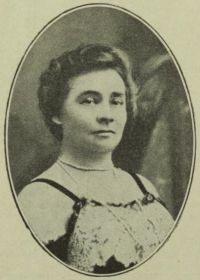
K. Langloh Parker

K. Langloh Parker

Summary

Portrait of K. Langloh Parker K. Langloh Parker The Euahlayi Tribe (1905)

As the boys began to grow up, when a good season came round, and game and grass were plentiful, the old men were seen to draw apart often and talk earnestly.
At length there came a night when was heard a whizzing, whirling boom far in the scrub. As the first echo of it reached the camp, the women, such as were still young enough to bear children, stopped their ears, for should any such hear the Gurraymi, the women's name for the Gayandi, or Boorah spirit's voice, that spirit will first make them mad, then kill them.
Source: Wikisource

Portrait of K. Langloh Parker K. Langloh Parker The Euahlayi Tribe (1905)

Figure to yourself what a damper to inspiration must have been that crowd of relations; how it must have slain the artist in Goolahwilleel.
How the old legend repeats itself, and now as then, how often the artist is woman–slain that she by the caterer may live. Surely in the interests of intellect was the prayer made: 'Give us our daily bread.'
Perhaps the old legend of Goolahwilleel was originally told with a moral, and that may be: why black artists are so well treated now.
A maker of new songs or corroborees is always kept well supplied with the luxuries of life
Source: Wikisource

Portrait of K. Langloh Parker K. Langloh Parker The Euahlayi Tribe (1905)

The whole scene impressed us as picturesque-the painted figures of the men and boys, with the peculiarly native stealthy tread, threading their way through the grey Coolabah trees; the decorated women throwing their leafy missiles with accurate aim into the ranks of the boys, who did not dare to look at their assailants. A Boorah boy must give no evidence of curiosity; the nil admirari attitude then begun clings to a black man through life. The women of the tribe express voluble surprise, but a black man never except by the dilation of his eyes.
Source: Wikisource

Get perspective with Kwize: daily news enlightened by great literature