Summary

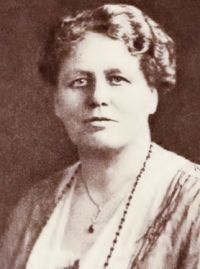
Portrait of Katherine Routledge Katherine Routledge The mystery of Easter island: the story of an expedition (1919)

Just in front of the headland can be seen the two peaks of the mountain of Rano Raraku, from which the statues were hewn and which is the most interesting place in the island; while on a clear day there can be obtained a glimpse of the northern coast and the sea beyond.
Such is Easter Island. It bears no resemblance to the ideal lotus-eating lands of the Pacific; rather, with its bleak grass-grown surface, its wild rocks and restless ocean, it recalls some of the Scilly Isles or the coast of Cornwall. It is not a beautiful country nor even a striking one, but it has a fascination of its own.
Source: Gutenberg

Portrait of Katherine Routledge Katherine Routledge The mystery of Easter island: the story of an expedition (1919)

The night is not less beautiful; then the summits of the mountains show dark against the sky, myriads of lights outline the near bays, shine out from the islands and twinkle irregularly up the hillsides, while from the further shore another galaxy are reflected half-way across the still dark water. The whole gives the impression of some magic scene in the Arabian Nights lit up for a great fiesta. Rio is wonderful, marvellous; it leaves one like the Queen of Sheba; and yet—when I am dead I hope that I may return and visit the little bay of Santa Cruz, I know I shall pass by Rio de Janeiro.
Source: Gutenberg

Portrait of Katherine Routledge Katherine Routledge The mystery of Easter island: the story of an expedition (1919)

The new-comer arriving from the north is at once struck with the distinction between Brazil and the Argentine. Rio, with its strain of dark descent living in the midst of a dream of sleepy beauty, is still perhaps partly mediæval and undoubtedly tropical; Buenos Aires, on its flat plain and dreary river, is awake, twentieth century, and wholly European; but it is to the south of Europe that the Argentine is akin and not to the north. A Latin race was the first to colonise the new land, and successive waves of the same are still reaching its shores.
Source: Gutenberg

Get perspective with Kwize: daily news enlightened by great literature