Summary

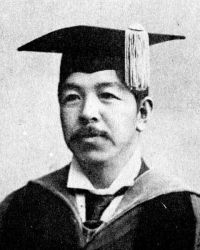
Portrait of Kazuo Hatoyama Kazuo Hatoyama The Civil Code of Japan Compared with the French Civil Code (1902)

To call the exercise of a right, a possession betrays laxity of expression inconsistent with good legislation. We have confined the term “possession” to a right over a thing and, as I have said before, the word thing is limited to its ordinary signification; it therefore became necessary to introduce into the Japanese Code a separate section entitled Quasi-Possession, where in it is enacted that the provisions of the chapter relating to Right of Possssion shall extend to cases where a person exercises rights over property with the intention of doing so on his own behalf.
Source: Wikisource

Portrait of Kazuo Hatoyama Kazuo Hatoyama The Civil Code of Japan Compared with the French Civil Code (1902)

If the effect of a sale is to transfer the ownership itself, then as a logical consequence the sale of a thing over which the seller has no ownership must be regarded as null and void, but by Japanese law a sale of this kind only creates an obligation to transfer the ownership, but does not transfer it. Therefore the sale of a right belonging to another need not necessarily be considered as null and void, but the intention of the parties is carried out by compelling the seller to obtain such a right and transfer it to the buyer.
Source: Wikisource

Portrait of Kazuo Hatoyama Kazuo Hatoyama The Civil Code of Japan Compared with the French Civil Code (1902)

Theoretically speaking, the Japanese law is opposed to the principle that in the case of a joint obligation, each debtor is liable for the performance of the whole obligation and that the plea of set-off can only be raised by the debtor who has a claim against the creditor. But on the practical grounds of convenience there are reasons for preferring the Japanese rule. To say that a joint debtor is liable for the performance of the whole obligation only determines his relation to the creditor.
Source: Wikisource

Get perspective with Kwize: daily news enlightened by great literature