Summary

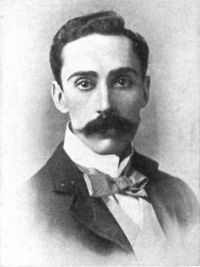
Portrait of Leonard Merrick Leonard Merrick McClure's Magazine, Volume 41, Number 2… (1913)

You don't mean to say that, if you cared for somebody else who wanted you, you'd marry your fiancé still?"
"If the somebody else were a millionaire," she said, "he would never hear that I cared for him. Yes, for love it is just possible that I might break off my engagement; but I should want my love to be understood. A millionaire would always doubt it in his heart of hearts—he would always think I had been disloyal for the sake of his wealth."
"If I were a millionaire," said Mayne, "I should be only too ready to believe anything of the kind you told me!"
Source: Wikisource

Portrait of Leonard Merrick Leonard Merrick McClure's Magazine, Volume 41, Number 2… (1913)

As Parker Mayne had humored his whims all his life, it was the most natural thing in the world that, instead of crossing to Calais when he reached England, he traveled to Tunbridge Wells. He was eager to know the girl, and he salved his conscience by reminding himself that he had the right to know her—wasn't he playing the part of a philanthropist and putting her lover in a position to marry her? What could be more natural, in the circumstances, than that he should, desire her acquaintance?
Source: Wikisource

Portrait of Leonard Merrick Leonard Merrick McClure's Magazine, Volume 41, Number 2… (1913)

But I'm a man; women were meant to have their share of candy in the world."
"The sweetest candy to a woman is—love," she answered. "A woman would rather marry the man she loved, even if he were poor, than sell herself for all the motors and diamonds in London."
"I have heard women say so—in novels," said Parker Mayne; "but in real life——"
"In real life you've heard at least one woman say so!"
"Don't you think a rich man can love as well as a poor one?" exclaimed Mayne jealously. "Why must the hero always be a beggar?"
Source: Wikisource

Get perspective with Kwize: daily news enlightened by great literature