Summary

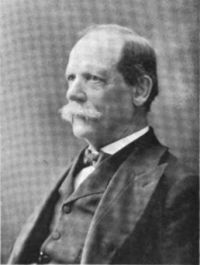
Portrait of Leonard Woolsey Bacon Leonard Woolsey Bacon A History of American Christianity

Under the pressure of a less copious flood of incursion the greatest empire in all history, strongest in arts and polity as well as arms, had perished utterly. If Rome, with her population of one hundred and twenty millions, her genius for war and government, and her long-compacted civilization, succumbed under a less sudden rush of invasion, what hope was there for the young American Republic, with its scanty population and its new and untried institutions?
Source: Gutenberg

Portrait of Leonard Woolsey Bacon Leonard Woolsey Bacon A History of American Christianity

And there were a very great number of honest, conscientious men who were appalled as they looked forward to the boldly threatened consequences of even the mildest action in opposition to slavery—the rending of the church, the ruin of the country, the horrors of civil war, and its uncertain event, issuing perhaps in the wider extension and firmer establishment of slavery itself. It was an immense power that the bold, resolute, rule-or-ruin supporters of the divine right of slavery held over the Christian public of the whole country, so long as they could keep these threats suspended in the air.
Source: Gutenberg

Portrait of Leonard Woolsey Bacon Leonard Woolsey Bacon A History of American Christianity

Whatever there is at present of asperity in the emulous labors of the competing denominations, would it not be manifold exasperated if the competition were restricted to four great corporations or confederations? If the intestine conflict of the church of Christ in America should even be narrowed down (as many have devoutly wished) to two contestants,—the Catholic Church with its diversity of orders and rites, on the one hand, and Protestantism with its various denominations solidly confederated, on the other,—should we be nearer to the longed-for achievement of Christian union?
Source: Gutenberg

Get perspective with Kwize: daily news enlightened by great literature