Summary

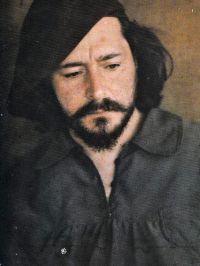
Portrait of Leonid Andreyev Leonid Andreyev The Seven Who Were Hanged

THERE IS NO DEATH
Just as Tanya Kovalchuk had thought all her life only of others and never of herself, so now she suffered and grieved painfully, but only for her comrades. She pictured death, only as awaiting them, as something tormenting only to Sergey Golovin, to Musya, to the others—as for herself, it did not concern her.
As a recompense for her firmness and restraint in the courtroom she wept for long hours, as old women who have experienced great misery, or as very sympathetic and kind-hearted young people know how to weep.
Source: Gutenberg

Portrait of Leonid Andreyev Leonid Andreyev The Seven Who Were Hanged

The horror of capital punishment is great when it falls to the lot of courageous and honest people whose only guilt is their excess of love and the sense of righteousness—in such instances, conscience revolts. But the rope is still more horrible when it forms the noose around the necks of weak and ignorant people. And however strange it may appear, I look with a lesser grief and suffering upon the execution of the revolutionists, such as Werner and Musya, than upon the strangling of ignorant murderers, miserable in mind and heart, like Yanson and Tsiganok.
Source: Gutenberg

Portrait of Leonid Andreyev Leonid Andreyev The Seven Who Were Hanged

And imagining to herself that Werner was in the next cell, driving his heels into the ground with his distinct, measured steps, Musya spoke, as if addressing him:
“No, Werner, my dear; it is all nonsense; it isn’t at all important whether or not you are killed. You are a sensible man, but you seem to be playing chess, and that by taking one figure after another the game is won. The important thing, Werner, is that we ourselves are ready to die. Do you understand? What do those people think? That there is nothing more terrible than death.
Source: Gutenberg

Get perspective with Kwize: daily news enlightened by great literature