Summary

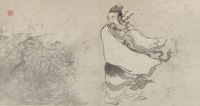
Portrait of Lie Yukou Lie Yukou Taoist teachings from the book of Lieh Tzŭ…

Lao Tzŭ, interpreting the plain facts of Nature before his eyes, concludes that behind her manifold workings there exists an ultimate Reality which in its essence is unfathomable and unknowable, yet manifests itself in laws of unfailing regularity. To this Essential Principle, this Power underlying the sensible phenomena of Nature, he gives, tentatively and with hesitation, the name of Tao, 'the Way', though fully realizing the inadequacy of any name to express the idea of that which is beyond all power of comprehension.
Source: Wikisource

Portrait of Lie Yukou Lie Yukou Taoist teachings from the book of Lieh Tzŭ…

Nearly all the Taoist writers are fond of parables and allegorical tales, but in none of them is this branch of literature brought to such perfection as in Lieh Tzŭ, who surpasses Chuang Tzŭ himself as a master of anecdote. His stories are almost invariably pithy and pointed. Many of them evince not only a keen sense of dramatic effect, but real insight into human nature. Others may appear fantastic and somewhat wildly imaginative.
Source: Wikisource

Portrait of Lie Yukou Lie Yukou Taoist teachings from the book of Lieh Tzŭ…

It is when he begins to draw inferences from it that the Taoist parts company from the average Christian. Believing, as he does, that the visible Universe is but a manifestation of the invisible Power behind It, he feels justified in arguing from the known to the unknown, and concluding that, whatever Tao may be in itself (which is unknowable) , it is certainly not what we understand by a personal God — not a God endowed with the specific attributes of humanity, not even (and here we find a remarkable anticipation of Hegel) a conscious God.
Source: Wikisource

Get perspective with Kwize: daily news enlightened by great literature