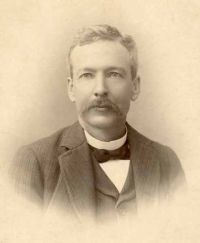
Luther Burbank

Luther Burbank

Summary

Portrait of Luther Burbank Luther Burbank Why I Am an Infidel (1926)

Burbank studied life at its fountain head—in the marvelous little buds and shoots and leaves that burgeon forth each spring to fill us anew with the awe for nature. He was a naturalist, no less than Thoreau. Nature was his teacher and he recognized her as a symbolism of that mysterious power which he was willing to have called God but which suited him as well if it was called merely Force. He saw nature, with Goethe, as the living, visible garment of that same mysterious power—God or Force, and faith in nature won him the eminent place he occupied in the world.
Source: Wikisource

Portrait of Luther Burbank Luther Burbank Why I Am an Infidel (1926)

Burbank, rising as ever at six o'clock and putting in a hard day's work in his experimental gardens fifty miles from San Francisco, lent a not too attentive ear to the conflict, going on serenely about his labors, his conscience clear, his mind keenly alert, but willing to wait for Death itself to show whether there is anything beyond. Burbank knew that the reason of weak men staggers before the thought of immortality, and that through appetite for it "imagination folds her weary pinions."
Source: Wikisource

Portrait of Luther Burbank Luther Burbank Why I Am an Infidel (1926)

Why should we omit crystals which grow as truly as plants and reproduce themselves quite as precisely to type, or the more primitive forms of life which are reproduced by division? Science is proving that the world is not half dead, but that every atom is all life and motion.
Life is self-expression, intricate organized polarity. The lure of happiness and the fear of pain are fundamental qualities possessed by all living things and are the two forces which have through untold millenniums kept what we usually call life from destruction by the ever encroaching outside forces of destruction.
Source: Wikisource

Get perspective with Kwize: daily news enlightened by great literature