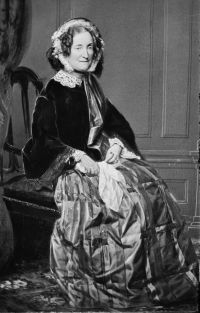
Lydia Sigourney

Lydia Sigourney

Summary

Portrait of Lydia Sigourney Lydia Sigourney Pleasant Memories of Pleasant Lands (1856)

Extensive collections of paintings, engravings, and other works of art, enrich this residence, as they do also that at Chiswick, another seat of this tasteful and liberal nobleman, where, among other antique specimens of sculpture, are three statues from Adrian's villa at Rome.
It is well to see Chatsworth and Haddon Hall in the same day. The contrast of their features deepens the impression which each leaves on the mind. The overwhelming splendor of one prepares you to relish and to reverence the silent, mournful majesty of the other.
Source: Wikisource

Portrait of Lydia Sigourney Lydia Sigourney Pleasant Memories of Pleasant Lands (1856)

It was during my visit to Wordsworth, that I first received intelligence of the melancholy declension of health and intellect which had befallen Southey. With reluctance I resigned my intention of going to Keswick, having been extremely desirous to see him, and being provided with letters of introduction from mutual friends. How mournful, that such a rayless cloud should envelop that genius which has so long thrown a bridge of light and beauty across the Atlantic.
Source: Wikisource

Portrait of Lydia Sigourney Lydia Sigourney Pleasant Memories of Pleasant Lands (1856)

It was delighful to see so eminent a poet, thus pursuing the calm tenor of a happy life, surrounded by all those domestic affections and charities, which his pure lays have done so much to cherish in the hearts of others.
Wordsworth seems habitually pensive, almost to impassiveness. Yet once I noticed in him some approach to naiveté. We were all seated at the table, conversing, after the tea-equipage had been removed. It was a round table, with a closely fitting cover of India-rubber, on which a wreath of rich flowers had been painted.
Source: Wikisource

Get perspective with Kwize: daily news enlightened by great literature