Summary

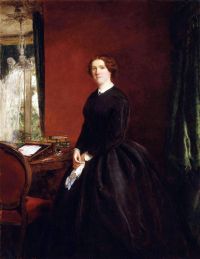
Portrait of M. E. Braddon M. E. Braddon London Pride, Or, When the World Was Younger

Her beauty has but ripened with the passing years; and she has walked the furnace of fine company in two cities, and has never been seared by fire. Love her! Could a man help loving beauty, and frankness, and a natural innocence which cannot be spoiled even by the knowledge of things evil, even by daily contact with sin in high places?”
Again there was a silence, and then, in a deeper tone, after a long sigh, Fareham said—
“I love and honour my wife; I adore my children; yet I am alone, Angela, and I shall be alone till death.”
Source: Gutenberg

Portrait of M. E. Braddon M. E. Braddon London Pride, Or, When the World Was Younger

Angela, Angela, be reasonable. I have brought you out of that trap. I have cut the net in which they had caught you. My love, you are free, and I am free, and you belong to me. You never loved Denzil Warner, never would love him, were you to live with him a quarter of a century. He is ice, and you are fire. Dearest, you belong to me. He who made us both created us to be happy together. There are strings in our hearts that harmonize as concords in music do. We are miserable apart, both of us. We waste, and fade, and torture ourselves in absence
Source: Gutenberg

Portrait of M. E. Braddon M. E. Braddon London Pride, Or, When the World Was Younger

More than ten years had come and gone since that bleak February evening when Sir John Kirkland carried his little daughter to a place of safety, in the old city of Louvain, and in all those years the child had grown like a flower in a sheltered garden, where cold winds never come. The bud had matured into the blossom in that mild atmosphere of piety and peace; and now, in this fair springtide of 1660, a girlish face watched from the convent casement for the coming of the father whom Angela Kirkland had not looked upon since she was a child, and the sister she had never seen.
Source: Gutenberg

Get perspective with Kwize: daily news enlightened by great literature