Summary

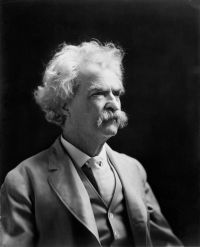
Portrait of Mark Twain Mark Twain A Connecticut Yankee in King Arthur's Court… (1889)

It seemed plain to me now, that with her training, those inherited prisoners were merely property—nothing more, nothing less. Well, when we inherit property, it does not occur to us to throw it away, even when we do not value it.
When I brought my procession of human bats up into the open world and the glare of the afternoon sun—previously blindfolding them, in charity for eyes so long untortured by light—they were a spectacle to look at. Skeletons, scarecrows, goblins, pathetic frights, every one; legitimatest possible children of Monarchy by the Grace of God and the Established Church.
Source: Wikisource

Portrait of Mark Twain Mark Twain A Connecticut Yankee in King Arthur's Court… (1889)

Dear me, for what trifling offenses the most of those forty-seven men and women were shut up there! Indeed, some were there for no distinct offense at all, but only to gratify somebody's spite; and not always the queen's by any means, but a friend's. The newest prisoner's crime was a mere remark which he had made. He said he believed that men were about all alike, and one man as good as another, barring clothes. He said he believed that if you were to strip the nation naked and send a stranger through the crowd, he couldn't tell the king from a quack doctor, nor a duke from a hotel clerk.
Source: Wikisource

Portrait of Mark Twain Mark Twain A Connecticut Yankee in King Arthur's Court… (1889)

Concentration of power in a political machine is bad; and and an Established Church is only a political machine; it was invented for that; it is nursed, cradled, preserved for that; it is an enemy to human liberty, and does no good which it could not better do in a split-up and scattered condition. That wasn't law; it wasn't gospel: it was only an opinion—my opinion, and I was only a man, one man: so it wasn't worth any more than the pope's—or any less, for that matter.
Well, I couldn't rack the executioner, neither would I overlook the just complaint of the priests.
Source: Wikisource

Get perspective with Kwize: daily news enlightened by great literature