Summary

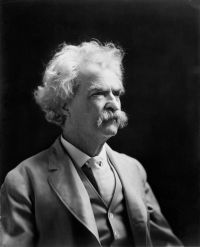
Portrait of Mark Twain Mark Twain How to Tell a Story, and Other Essays

The humorous story is told gravely; the teller does his best to conceal the fact that he even dimly suspects that there is anything funny about it; but the teller of the comic story tells you beforehand that it is one of the funniest things he has ever heard, then tells it with eager delight, and is the first person to laugh when he gets through. And sometimes, if he has had good success, he is so glad and happy that he will repeat the “nub” of it and glance around from face to face, collecting applause, and then repeat it again. It is a pathetic thing to see.
Source: Gutenberg

Portrait of Mark Twain Mark Twain How to Tell a Story, and Other Essays

THE INVALID’S STORY
I seem sixty and married, but these effects are due to my condition and sufferings, for I am a bachelor, and only forty-one. It will be hard for you to believe that I, who am now but a shadow, was a hale, hearty man two short years ago, a man of iron, a very athlete!—yet such is the simple truth. But stranger still than this fact is the way in which I lost my health. I lost it through helping to take care of a box of guns on a two-hundred-mile railway journey one winter’s night.
Source: Gutenberg

Portrait of Mark Twain Mark Twain How to Tell a Story, and Other Essays

This is art and fine and beautiful, and only a master can compass it; but a machine could tell the other story.
To string incongruities and absurdities together in a wandering and sometimes purposeless way, and seem innocently unaware that they are absurdities, is the basis of the American art, if my position is correct. Another feature is the slurring of the point. A third is the dropping of a studied remark apparently without knowing it, as if one were thinking aloud. The fourth and last is the pause.
Source: Gutenberg

Get perspective with Kwize: daily news enlightened by great literature