Summary

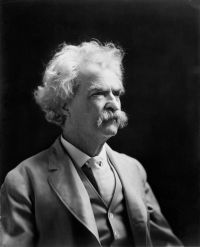
Portrait of Mark Twain Mark Twain The Innocents Abroad — Chapter XXXVII. (1869)

Taking the kind expression that is in the Emperor’s face and the gentleness that is in his young daughter’s into consideration, I wondered if it would not tax the Czar’s firmness to the utmost to condemn a supplicating wretch to misery in the wastes of Siberia if she pleaded for him. Every time their eyes met, I saw more and more what a tremendous power that weak, diffident school-girl could wield if she chose to do it. Many and many a time she might rule the Autocrat of Russia, whose lightest word is law to seventy millions of human beings!
Source: Wikisource

Portrait of Mark Twain Mark Twain The Innocents Abroad — Chapter XXXVII. (1869)

It seemed strange—stranger than I can tell—to think that the central figure in the cluster of men and women, chatting here under the trees like the most ordinary individual in the land, was a man who could open his lips and ships would fly through the waves, locomotives would speed over the plains, couriers would hurry from village to village, a hundred telegraphs would flash the word to the four corners of an Empire that stretches its vast proportions over a seventh part of the habitable globe, and a countless multitude of men would spring to do his bidding.
Source: Wikisource

Portrait of Mark Twain Mark Twain The Innocents Abroad — Chapter XXXVII. (1869)

The Empress appeared in the verandah, and the little Grand Duchess came out into the crowd. They had beaten us there. In a few minutes, the Emperor came himself on horseback. It was very pleasant. You can appreciate it if you have ever visited royalty and felt occasionally that possibly you might be wearing out your welcome—though as a general thing, I believe, royalty is not scrupulous about discharging you when it is done with you.
The Grand Duke is the third brother of the Emperor, is about thirty-seven years old, perhaps, and is the princeliest figure in Russia.
Source: Wikisource

Get perspective with Kwize: daily news enlightened by great literature