Summary

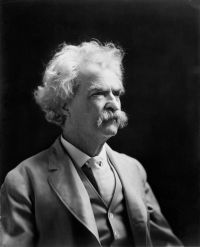
Portrait of Mark Twain Mark Twain The Treaty With China, its Provisions Explained

It looks to the opening up, in China, of a vast and lucrative commerce with the world, and of which America will have only her just share, nothing more. It looks to the lifting up of a mighty nation and conferring upon it the boon of a purer religion and of a higher and better civilization than it has known before. It is a treaty made in the broad interests of justice, enlightenment, and progress, and therefore it must stand. It bridges the Pacific, it breaks down the Tartar wall, it inspires with fresh young blood the energies of the most venerable of the nations.
Source: Gutenberg

Portrait of Mark Twain Mark Twain The Treaty With China, its Provisions Explained

Let us be lenient with the little absurd peculiarities of the Chinese, for manifestly these people are our own blood relations. Let us look charitably now upon a certain very serious obstacle which lies in the way of their sudden acceptance of a great railroad system. Let us remember that China is one colossal graveyard—a mighty empire so knobbed all over with graves that the level spaces left are hardly more than alleys and avenues among the clustering death-mounds.
Source: Gutenberg

Portrait of Mark Twain Mark Twain The Treaty With China, its Provisions Explained

There is in China a class of foreigners who demand privileges, concessions and immunities, instead of asking for them—a class who look upon the Chinese as degraded barbarians, and not entitled to charity—as helpless, and therefore to be trodden underfoot—a tyrannical class who say openly that the Chinese should be forced to do thus and so; that foreigners know what is best for them, better than they do themselves, and therefore it would be but a Christian kindness to take them by the throat and compel them to see their real interests as the enlightened foreigners see them.
Source: Gutenberg

Get perspective with Kwize: daily news enlightened by great literature