Summary

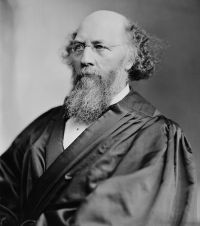
Portrait of Stephen Johnson Field Stephen Johnson Field Chew Heong v. United States — Dissent

Every government must judge and determine for itself the proper occasion for the exercise of such a power; and such a power, I suppose, is impliedly reserved by every party to a treaty, and I hope and believe belongs inalienably to the government of the United States. It is true that such a power may be abused; so may the treaty-making power and all other powers. But for our security against such abuse, we may and must rely on the integrity, wisdom, and good faith of our government.' 5 Op.
Source: Wikisource

Portrait of Stephen Johnson Field Stephen Johnson Field Chew Heong v. United States — Dissent

They do not and will not assimilate with our people; and their dying wish is that their bodies may be taken to China for burial. But this is not all. The treaty is fair on its face. It stipulates for like privileges, immunities, and exemptions on both sides,-to our people going to China and to their people coming here. But the stipulations to our people are utterly illusive and deceptive. No American citizen can enjoy in China, except at certain designated ports, any valuable privileges, immunities, or exemptions.
Source: Wikisource

Portrait of Stephen Johnson Field Stephen Johnson Field Chew Heong v. United States — Dissent

If the construction I give works hardship to any persons, it is for congress, not this court, to afford the remedy. This court has no dispensing power over the provisions of an act of congress. It is itself only the servant of the law, bound to obey, not to evade or make it. The act of May 6, 1882, requires, in my judgment, a certificate for their admission from all Chinese laborers coming to the United States, whether they have been in the country before or not.
Source: Wikisource

Get perspective with Kwize: daily news enlightened by great literature