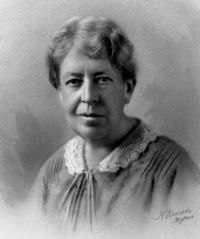
 Mary Whiton Calkins,
Kant's Conception of the Leibniz Space and Time Doctrine
(1897)
Mary Whiton Calkins,
Kant's Conception of the Leibniz Space and Time Doctrine
(1897)
“ From the puzzling nature of time, finally, Leibniz reasons, just as Kant does, to its ideality. “Everything of time,” he says, “which exists, is successive, and so perishes continually; and how can a thing exist eternally which, to speak exactly, never exists? ... Only instants of time exist, and the instant is not even a part of time. Therefore time could not be anything except ideal (le temps ne saurait être qu‘une chose idéelle) ; and the analogical relation of time and space will make us consider one as ideal as the other.” ”
