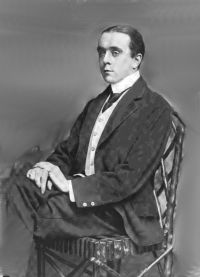
Max Beerbohm

Max Beerbohm

Kolniyatsch (1914)

Summary

Portrait of Max Beerbohm Max Beerbohm,  Kolniyatsch (1914)

“ By birth and training a man of the people, he was yet an aristocrat to the finger-tips, and Byron would have called him brother, though one trembles to think what he would have called Byron. First and last, he was an artist, and it is by reason of his technical mastery that he most of all outstands. Whether in prose or in verse, he compasses a broken rhythm that is as the very rhythm of life itself, and a cadence that catches you by the throat, as a terrier catches a rat, and wrings from you the last drop of pity and awe. ”
Source: Wikisource

Portrait of Max Beerbohm Max Beerbohm,  Kolniyatsch (1914)

“ By more than one critic he has been called a pessimist, and it is true that a part of his achievement may be gauged by the lengths to which he carried pessimism—railing and raging, not, in the manner of his tame forerunners, merely at things in general, or at women, or at himself, but lavishing an equally fierce scorn and hatred on children, on trees and flowers and the moon, and indeed on everything that the sentimentalists have endeavored to force into favor. ”
Source: Wikisource

Portrait of Max Beerbohm Max Beerbohm,  Kolniyatsch (1914)

“ But where, for the genuine thrill, would England be but for her good fortune in being able to draw on a seemingly inexhaustible supply of anguished souls from the Continent—infantile wide-eyed Slavs, Titan Teutons, greatly blighted Scandinavians, all of them different, but all of them raving in one common darkness and with one common gesture plucking out their vitals for exportation? ”
Source: Wikisource

Get perspective with Kwize: daily news enlightened by great literature