Summary

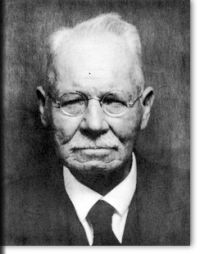
Portrait of Max Uhle Max Uhle The Emeryville Shellmound (1907)

In all parts of the world, even today, people may be seen on the shore at low water gathering for food the shells uncovered by the retreating tide; and although under the changed conditions of life they raise no shellmounds, these people always belong to the lower classes of society, and lead in this manner a primitive as well as a simple life. Peoples depending for food upon collecting shells are usually not agriculturists, but fishermen, and perhaps hunters as a secondary occupation. Their implements are of the rudest kind, made of bone, stone, wood, and the like.
Source: Gutenberg

Portrait of Max Uhle Max Uhle The Emeryville Shellmound (1907)

The fact that in California no shellmound is known which is now inhabited or has been inhabited in historic time would speak for this assumption. However, many instances point to habitation of the mounds in the most recent times, not only in a few places, but in different parts of the whole inhabited world. And this cannot surprise us; for we can see primitive man reach into the most recent, nay, even the present time, in various parts of the globe.
Source: Gutenberg

Portrait of Max Uhle Max Uhle The Emeryville Shellmound (1907)

If we attribute to the shellmound an age representing many centuries, cultural differences should be indicated in the successive strata. For it is impossible that the cultural state of one and the same place should have remained stationary for many centuries and, even judging by the mass alone, the mound could not have reached such a height in less than a considerable number of centuries.
Source: Gutenberg

Get perspective with Kwize: daily news enlightened by great literature