Summary

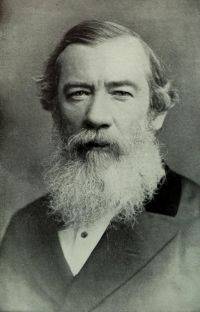
Portrait of Moncure Daniel Conway Moncure Daniel Conway The Pilgrimage from Deism to Agnosticism

For there is no rational ground for supposing that suffering is a medicine, or that all tears are to be wiped away. If a gracious God keeps himself in our remembrance by murdering our children, what would an ungracious God do? A human father beating a child to keep it from wandering from his “protection “is the parental type to which Theism is compelled to resort, in apologizing for human calamities. Deism escaped this dilemma by limiting the direct action of its deity to original creation and general laws; but Theism, being a religion, must maintain an immanent and moral deity.
Source: Wikisource

Portrait of Moncure Daniel Conway Moncure Daniel Conway The Pilgrimage from Deism to Agnosticism

The most significant thing about Deism was that its representatives gave no serious consideration to the existence of evil. While they denounced Jehovah’s cruelties, none of them attempted to vindicate the originator of natural laws for the evils caused by those laws. This omission alone sufficiently proves that Deism was fundamentally a scientific hypothesis. It could approach no nearer to religion than the emotions excited by the marvels and sublimities and beauties of nature.
Source: Wikisource

Portrait of Moncure Daniel Conway Moncure Daniel Conway The Pilgrimage from Deism to Agnosticism

Pantheism wrote most English poetry from Shelley to Tennyson. Wordsworth was its great psalmodist, and his pious enthusiasm flowered in Emersonian transcendentalism. In his early career Emerson made his pilgrimage from New England to Rydal Mount, where he walked hill and lakeside with Wordsworth, who recited his poems amid the nature that had inspired them, till the morning air became breath of the Holy Ghost, and the vault above as the blue eye of God.
Source: Wikisource

Get perspective with Kwize: daily news enlightened by great literature