Summary

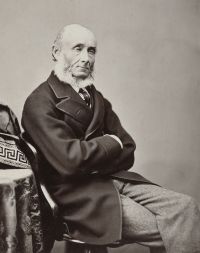
Portrait of Mountague Bernard Mountague Bernard Remarks on Some Late Decisions Respecting the Colonial Church (1866)

If it be suggested, for instance, that the Crown has power to command the Archbishop of Canterbury to consecrate a Bishop to whom no see is assigned, that is a power the existence of which must be proved like that of any other alleged power. That the Supremacy should have worn, so to speak, a more personal aspect—that we should have been accustomed to think of it as more closely attached to the person of the Monarch—than other prerogatives, is natural and intelligible.
Source: Wikisource

Portrait of Mountague Bernard Mountague Bernard Remarks on Some Late Decisions Respecting the Colonial Church (1866)

But I am strongly persuaded that, whatever we may think or desire, whatever troubles and difficulties the Colonial Church may have to encounter in time to come, whatever theories may be spun, or expedients imagined, neither judgments of Courts, nor acts of local Legislatures, nor statutes of the Imperial Parliament, can establish or perpetuate in the colonies an ecclesiastical supremacy of the Crown over a single denomination
Source: Wikisource

Portrait of Mountague Bernard Mountague Bernard Remarks on Some Late Decisions Respecting the Colonial Church (1866)

What we do mean, as a little reflection will shew, is this—that the rules of an established society are part of the law of the land, and enforced as such; whilst the rules of a voluntary society are not part of the law of the land, and are not enforced as such. When the members, or any of the members, of a religious society have, as such, special rights and obligations, capacities or incapacities, created by the law of the land—when, in two words, they have a legal status—the society is established: they have none when it is not established.
Source: Wikisource

Get perspective with Kwize: daily news enlightened by great literature