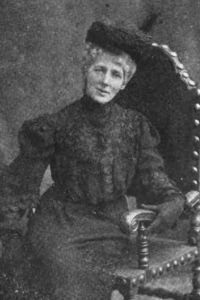
Mrs. Hugh Fraser

Mrs. Hugh Fraser

Summary

Portrait of Mrs. Hugh Fraser Mrs. Hugh Fraser Italian Yesterdays, vol. 2

Here Boniface showed all the valour of his race and place. He prepared to meet death with the dignity of a priest and the courage of a soldier. “If I am to die, I will die like a Pope,” he said. Every friend, every Cardinal and chaplain and courtier fled as the shout of “A Colonna, a Colonna!” rose from the lower streets of the mountain town. Not a soul was left in the palace but the Pope. He put on his pontifical vestments, placed the tiara on his head, and mounted his throne, where he sat like a statue, awaiting certain death.
Source: Gutenberg

Portrait of Mrs. Hugh Fraser Mrs. Hugh Fraser Italian Yesterdays, vol. 2

Of all the angry barons who had rallied to Joan’s support, the last mentioned, Bertrand d’Artois, really loved her for herself, and was actuated by no motive of personal gain, except—alas!—his lawless hope of becoming united to her in matrimony once her husband were removed from the path of his criminal passion. In vain his father, the brave and noble Charles of Artois, one of the regents of the kingdom, strove to dissuade him from the perilous course of a love as treasonable as it was immoral; nothing was of any avail to hold back the young man from the pursuit of his designs.
Source: Gutenberg

Portrait of Mrs. Hugh Fraser Mrs. Hugh Fraser Italian Yesterdays, vol. 2

Of all the landmarks of history with which the Kingdom of Naples is dotted none, perhaps, is more rich in Romance or more imbued with the spirit of Tragedy than a certain straggling, half-ruined castle near the little village of Pizzo, upon the coast of Calabria.
A round tower, grey and sullen with age, faces the sea; in the wall of it is set a small, heavily barred window, through which one of the very few comparatively good Kings of Naples looked his last upon a world which had seen him rise from a peasant to a monarch.
Source: Gutenberg

Get perspective with Kwize: daily news enlightened by great literature