“ Subiaco, that pointed pile of houses large and small which culminates in the Rocca del Cardinale, was veiled in shadow; not a branch stirred on the olives clustered behind the small, red villa with green blinds, rising on the summit of the circular cliff, round whose base winds the public road; not a branch stirred on the great oak beside it, overhanging the little ancient oratory of Santa Maria della Febbre. The air, laden with the odours of wild herbs and recent rain, came fresh from Monte Calvo. ”
Subiaco
Definition and stakes
Quotes about “Subiaco”
M. F. Mansfield, Italian Highways and Byways from a Motor Car
“ Down from the castle walls slopes the town, its happy, unprogressive people as somnolent as of yore.Subiaco is one of the most accessible and conveniently situated hill towns of Italy, if any would seek it out. Nero first exploited Subiaco when he built a villa here, as he did in other likely spots round about. Nero built up and he burned down and he fiddled all the while. He was decidedly a capricious character. History or legend says that Nero’s cup of cheer was struck from his hand by lightning one day when he was drinking the wine of Subiaco here at his hillside villa. ”
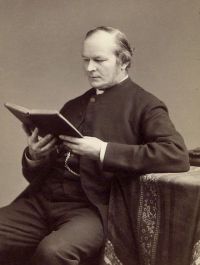
F. W. Farrar,
Darkness and Dawn; Or, Scenes in the Days of Nero…
“ Not even at Subiaco was he safe from conspirators; he never knew what slave, what soldier, what minion might stab his heart or poison his wine. Of the society which had thronged that villa in his earlier days of empire, there was scarcely one whom he had not killed. Britannicus and Octavia, Seneca and Burrus, Lucan and Vestinus, even Petronius, had been in turns his victims; and poor, handsome Paris did not long escape. ”
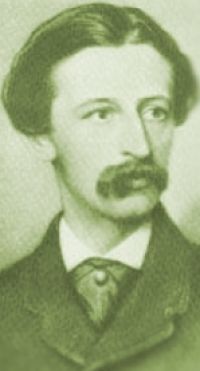
by Henry James, Italian Hours (1909)
“ Fortune, in the event, had never favoured my going, but I was to give myself up at last to the sense of her quite taking me by the hand, and that is how I now think of our splendid June day at Subiaco. The note of the wondrous place itself is conventional "wild" Italy raised to the highest intensity, the ideally, the sublimely conventional and wild, complete and supreme in itself, without a disparity or a flaw ”
E. Gordon Duff, Early Printed Books
“ About June, then, Sweynheym and Pannartz left the Monastery of Subiaco and transferred their printing materials to Rome, finding a home in a house [62] belonging to the brothers Peter and Francis de Maximis. The semi-Gothic fount of type which had been used at Subiaco was discarded in favour of one more Roman in character, though heavily cut and not so graceful as the Venetian of the same period. A curious appearance is given to it by the invariable use of the long s. Their first venture was again a work of Cicero, the Epistolæ ad familiares, a large quarto of thirty-one lines to the page. ”
Augustus J. C. Hare,
The Story of My Life, volumes 4-6
“ Subiaco, April 16.—We spent Good Friday on the seashore at Porto d’Anzio, a delightful place, overgrown with gorgeous pink mesembryanthemum, and with huge remains of Nero’s palace projecting far into the sea. For Easter we were at Velletri, and on Monday drove through the blooming country to Cori, where, after seeing the beautiful temple, we rode along the edge of stupendous precipices to Norba, and the man-deserted flower-possessed fairy-like town of Ninfa, returning by the light of the stars—‘le Ninfe eterne’ of Dante. ”
F. Marion Crawford, Casa Braccio, Volumes 1 and 2
“ In the year 1844, modern civilization had not yet set in, and Subiaco was, within, what it still appears to be from without, a somewhat gloomy stronghold of the Middle Ages, rearing its battlements and towers in a shadowy gorge, above a mountain torrent, inhabited by primitive and passionate [5] people, dominated by ecclesiastical institutions, and, though distinctly Roman, a couple of hundred years behind Rome itself in all matters ethic and æsthetic. It was still the scene of the Santacroce murder, which really decided Beatrice Cenci's fate ”
Charles Gounod,
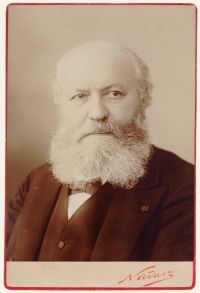
Charles Gounod
“ If you write to me, direct to the Poste Restante at Naples. I will go and fetch my letters when I am in town, and have them sent after me wherever I may be. I have been making a tour, quite lately, in the mountains near Subiaco, Civitella, Olevano, &c. I saw much that was beautiful, but what interested me most was the Convent of San Benedetto at Subiaco. I saw and felt things there that I shall never forget.I have had news from home lately. They are all well, and send you affectionate messages. They tell me Urbain had written you to Genoa, so that you might find the letter there on the 15th. ”
Mrs. Hugh Fraser,
Italian Yesterdays, vol. 2
“ But when the conspirators sent a crowd of abandoned women to invade the garden where the monks were working, he felt the time had come when he should depart and draw the attacks away from his beloved disciples. So, having set all things in order and adjured the mountain community to be faithful to its vows, he travelled southwards, surely with a heavy heart, and did not pause [29] till he had put nearly a hundred miles between himself and his beloved retreat at Subiaco. ”
F. Marion Crawford, A Roman Singer
“ My countryman from Subiaco knows every inch of these hills. He says that the pass above Fillettino is impracticable for any animals save men, mules, and donkeys. A horse would roll down at every turn. My mules are the best of their kind, and there are none like them here. By sunrise I shall be over the Serra and well on the way to Ceprano, or whatever place I may choose for joining the railroad. ”
Vernon Lee,
The Spirit of Rome
“ But the Sacro Speco's little up and down chapels, a miniature Assisi, empty, yet not abandoned on this sunburnt rock, are very impressive.I take great pleasure following the Anio, which we first met coming out of the narrow gorge round the S. Scolastica hill (the other side behind Nero's ruins is a hill covered with pale green scrub, beech, or more likely alder) , down below Subiaco. In the ever-widening valley it is an impetuous stream, but not at all a torrent ”
John Henry Parker,
The archæology of Rome, Part VIII
(1876)
“ Marcia [241] (B.C. 145) . This stream also comes from near Subiaco, 39 miles from Rome, 36 on the Via Valeria, and 3 off it on a cross-road, near the village of Arsoli. There is a small lake 38 miles from Rome on the same road (which is another source of this aqueduct) , into which the water gushes out from under the limestone rock; it is intensely cold in all weathers, and the water is of a light green colour in the lake. ”
Antonio Fogazzaro,
The Saint
(1906)
“ How could Don Clemente's lofty forehead, his blue eyes, so serene and pure, have known passion? In the soft, submissive, almost timid voice of the young Benedictine there was—to Maria's mind—a chastity too delicate, a purity too virginal. "You do not believe," Giovanni answered, "and perhaps, after all, you are right; perhaps, after all, he is not Maironi. Still it will be better to let him know to-night, in some way, that Signora Dessalle is coming to Subiaco, and that she will, of course, visit the convents. ”
John Henry Parker,
The archæology of Rome, Part VIII
(1876)
“ Remains of another castellum aquæ above Subiaco, and the mouth of a cave connected with the aqueduct.1555. Specus of the Anio Novus cut in the cliff of the valley of the Anio. This is below the level of the great bar, and the water was forced to go through the specus into Rome by the bar being higher than the specus. A modern winding road has now been cut here, and the rock has been in part cut away, shewing an opening into the specus, which is six feet high and two feet wide. Above is seen a tower and an embattled wall of the modern Villa Gori. ”
John Henry Parker,
The archæology of Rome, Part VIII
(1876)
“ Some of the sources of the Claudia were in the lake of S. Lucia, below Subiaco, between that and Vico Varo (see 1536) . In its course through the hills the specus is almost entirely underground, and cannot be shewn in photographs; but the line of its course is shewn in the map of the aqueducts from Rome to Subiaco, reduced by photography in Nos. 1967* to 1984*, especially in Nos. 1976*, 1978*, 1979*, 1981*. It crosses mountain streams on the bridges called Ponte Lupo (1532) and Ponte di S. Antonio (1530) ; and an inscription relating to it, of A.D. 88, is given in No. ”
F. Marion Crawford, Casa Braccio, Volumes 1 and 2
“ If you give nothing, we shall have had your company. In general, we take three pauls a day, and we give the wine. You shall make the price as you like it. Who thinks of these things? We are Christians."When Griggs spoke of the project to Gloria, she embraced it eagerly. He said that he should be obliged to come to Rome every week on account of [186] his correspondence. But Subiaco was no longer as inaccessible as formerly, and there was now a good carriage road all the way and a daily public conveyance. ”
Lina Duff Gordon,
The Story of Assisi
“ Then there are places where the grassy hillocks stand up so high that they hide the town altogether, and we seem to be looking out upon the broad vista of the valley from an isolated peak. At all times it is beautiful; but choose a stormy day in springtime, when the clouds are driving upwards from the plain only lately covered with mist, and the nearer hills are dark their cities catching the late evening sunshine as it breaks through the storm, while wind-swept Subasio looks bleak in the white light showing here and there patches of palest green. ”
Lina Duff Gordon,
The Story of Assisi
“ It was probably from the Porta Nuova, close to where the church of Santa Chiara now stands, that he looked out on the Umbrian country he loved so well. Here Mount Subasio rises grey and bleak above the olive groves which slope gradually down to the valley 44 where a white road leads past Spello to Foligno in the plain and on to Spoleto high up in the mountain gorge which brings the valley to a close. All these towns were dear and familiar to Francis. ”
“ And it was not long before the Human Fly gave way to the Only Genuine Blood-Sweating Behemoth of Holy Writ Now in Captivity. Then Sube truly lost his heart.The longer he gazed at the behemoth the more [Pg 209] he admired it. It was, indeed, a case of love at first sight. Under his fascinated scrutiny the shifty eyes became kind; the broad ugly nose and cavernous mouth seemed to smile at him; the wrinkled hide looked as soft as a baby's skin. How he would have liked one for a pet!In his mind as he stood there a definite idea assumed form; he would never be a lawyer when he grew up. ”
Frederic H. Sawyer, The Inhabitants of the Philippines
“ But they are said not to possess wooden idols like the Manobos, Mandayas and Montéses. They raise rough [357] altars of sticks, on which they lay out offerings to their deities. They call these altars Paga-paga. The offerings consist of rice, chickens, eggs, buyo and tobacco, also a large jar of pangasi, a beer brewed from rice. When making their offerings, they sing, dance, and pray round the altar to the sound of the sucaran, a rough kind of cymbal or gong. Amongst the Subanos only the dattos or rich men have more than one wife. ”
Olave M. Potter, A Little Pilgrimage in Italy
“ ASSISI Almost the first thing we noticed in Assisi was the Biblical simplicity of life. This little city, rose and white, upon the lower slopes of Subasio would be like a picture out of the Bible if it were not so Gothic. Its steep and rough-paved streets have grasses growing in between their stones; its grim and silent houses, built of Subasian rock, are as unresponsive as the East; at their barred gates stand mules and asses tethered, with clumsy wooden saddles on their backs, or sacks of grain thrown pannier-wise. ”
Antonio Pigafetta,
The first voyage round the world…
“ From Mazaba and Seilani and Subo, by the course which we came, towards the south part, take care; for there are many shoals, and they are very bad; for this a canoe would not stop which met us in this course.From the mouth of the channel of Subo and Matan we went west in mid-channel, and met with the town of Subu, at which we anchored, and made peace, and there they gave us rice and millet and flesh; and we remained there many days; and the king and the queen, with many people, became Christians of their free will. ”
Rafael Sabatini,
Bellarion the Fortunate: A romance
(1926)
“ We have to deal with what we find.' He turned to Stoffel. 'We must retreat across the river before Buonterzo thrusts us into it. There is a ford here above Travo at this height of water.' 'That,' ventured Stoffel, 'is but to increase our separation from Carmagnola.' 'Don't I know it?' roared Facino, now thoroughly in a rage with himself and all the world. 'Do you suppose I can perceive nothing? Let a messenger ride at once to Carmagnola, ordering him to fall back, and cross below Rivergaro. The river should be fordable just below the islands. ”
“ A few moments later he was standing before his beloved poster regarding his heart's desire with a sense of peculiar proprietorship. After a little he sat down on the grass; and while Sport, his old spotted dog, lay at his feet lazily digging at one ear with a rheumatic hind-foot, Sube drew from his pocket and read aloud in a halting monotone certain portions of the fortieth chapter of the Book of Job, often pausing between verses to verify the observations of the Patient Prophet by comparison with the portrait taken from life. ”
Katharine S. Macquoid,
Pictures in Umbria
“ On the left we saw the outside of the famous Etruscan tomb of the Volumnii, and soon after passed the pretty village of Ponte San Giovanni, getting a glimpse of the Tiber.From the railway one has a good view of Assisi, clinging to the side of Monte Subasio, and the station is close to the church of Santa Maria degli Angeli; but we were bound for Foligno, and did not stop here to-day. As the railway circles round it we noted the splendid mass made by Subasio in this chain of mountains. ”
Hermann Sudermann,
Morituri: Three One-Act Plays
“ Then shall they take wives and children into the midst of them, and, head high, with naked swords, descend straight through the Byzantian camp toward Naples, to buy a piece of bread. And I tell ye, with such fear shall they be gazed at, that not even once shall a dog of the Huns dare to bark at them.Teja.Wife and child! Wife and child! What have we to do with them? Athanaric. King, thou revilest the dearest of our possessions.Teja.Maybe!--I know only that there were too many mouths in the morning when the rations were divided. Otherwise we might have been able to support ourselves. ”
The Philippine Islands, 1493-1898…
“ The Subanos mutinied in the jurisdiction of Zamboanga, in the village called Siocon, where they killed Father Juan del Campo23 of the Society of Jesus. The villages of the islands of Cebú and Bohol, who are warlike people, were wavering in their loyalty. But Divine Clemency did not permit them to declare themselves. Thus with the patience and tolerance of the father ministers, who suffered many hardships and found themselves in great danger, those fires—which could have consumed the loyalty of the provinces of these islands—were soon extinguished. ”
Rafael Sabatini,
Captain Blood: His Odyssey — Chapter XI: Filial Piety
(1922)
“ New to the seas of the Spanish Main and to the ways of the adventurers who sailed it, Captain Blood still entertained illusions. But the next dawn was to shatter them rudely and for ever.Coming on deck before the sun was up, he saw land ahead, as the Spaniard had promised them last night. Some ten miles ahead it lay, a long coast-line filling the horizon east and west, with a massive headland jutting forward straight before them. Staring at it, he frowned. He had not conceived that Curaçao was of such considerable dimensions. Indeed, this looked less like an island than the main itself. ”
The Philippine Islands, 1493-1898…
“ For ministration on the coast of La Caldera and Siocon, which was left deserted by the death of Father Juan del Campo, the father provincial Francisco de Roa assigned Father Francisco Combés, who gladly went to instruct the Subanos. Most earnestly he applied himself to bringing those wild and timid creatures into closer social relations, and in doing this he was able to forward their instruction in the mysteries of the faith; and gradually they became accustomed to a more rational and Christian mode of life. On the river of Sibuco there was an Indian named Ondol ”