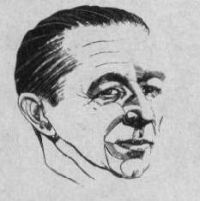
Murray Leinster

Murray Leinster

The trap (1929)

Summary

Portrait of Murray Leinster Murray Leinster,  The trap (1929)

“ If Nesbit knew that he had lied, and knew Grahame, the detective might have made inquiries in Richmond. He might have learned that Grahame was not to be found. He would know, of course, that a man in Grahame’s business makes his deals with cold cash, and carries it on him. He might couple that fact with Grahame’s disappearance, and have a case to work on in his clumsy, patient fashion. If so, his patience would lead him to devise a trap for Colby. ”
Source: Gutenberg

Portrait of Murray Leinster Murray Leinster,  The trap (1929)

“ Colby felt sick with disappointment before he had finished hunting. Every pocket contained its appropriate objects—a knife, a watch, a luck piece, scraps of paper with undecipherable notations on them, a newspaper clipping in an envelope.
Pure despair filled him the instant before he thrust his hand into Grahame’s inside breast pocket. But the wallet was there, and the shock of finding it brought back confidence. He should have known! Dealing as Grahame did, the man knew all the tricks of the trade. An inside breast pocket is the one place that a dip will never touch.
”
Source: Gutenberg

Portrait of Murray Leinster Murray Leinster,  The trap (1929)

“ A room in a boarding house can be horribly still. On the night when Colby came home and saw the trap letter returned, his room was quiet with a deadly, isolated silence in which innumerable small noises from outside came with the sharpness of scratches on a window pane. He heard the squeaking of a car’s brakes blocks away; voices in the street outside; the creak of bed springs somewhere in the house, as someone, reading in bed, shifted his position. ”
Source: Gutenberg

Get perspective with Kwize: daily news enlightened by great literature