Immobility denotes the state of non-motion or resistance to change, encompassing physical, conceptual, and legal dimensions. Authors have explored it through varied lenses: Proust reflects on the perceived fixity of objects shaped by human perception, while Conrad evokes its eerie stillness in isolated settings.
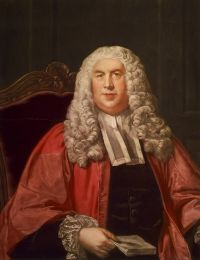
Blackstone contrasts the immobility of real property with the transient nature of personal possessions, and Kant examines possession as a rational or empirical construct. These perspectives reveal immobility as a multifaceted phenomenon, bridging existential stasis, legal permanence, and psychological inertia.
 Marcel Proust,
Swann's Way
(1913)
Marcel Proust,
Swann's Way
(1913)