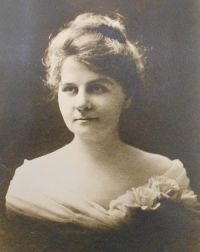
Myrta Lockett Avary

Myrta Lockett Avary

Summary

Portrait of Myrta Lockett Avary Myrta Lockett Avary Dixie After the War

I owe reverence to the memory of a black mammy and a debt to negroes generally for much kindness. The real negro I like, the poet of the veldt and jungle, the singer in field and forest, the tiller of the soil, the shepherd of the flocks, the herdsman of the cattle, the happy, soft-voiced, light-footed servitor. The negro who is a half-cut white man is not a negro, and it can be no offense to the race to say that he is unattractive when compared with the dear old darkey of Dixie who was worth a million of him!
Source: Gutenberg

Portrait of Myrta Lockett Avary Myrta Lockett Avary Dixie After the War

A reserved and dignified city is the Capital on the James, taking joys sedately; but that day she wore her heart on her sleeve; she cheered and wept. The green hills, streets, sidewalks, were alive with people; porches, windows, balconies, roofs, were thronged; Main Street was a lane of uncovered heads as two carriages rolled swiftly towards the Spotswood, one holding Mr. Davis, General Burton, Dr. Cooper and Mr. Harrison; the other, Mrs. Davis and Mrs. Lyons, Mr. Lyons and Judge Ould; an escort of Federal cavalry bringing up the rear with clattering hoofs and clanging sabres.
Source: Gutenberg

Portrait of Myrta Lockett Avary Myrta Lockett Avary Dixie After the War

The one true plane of equalisation is that of mutual service, each race doing for the other all it can. The old negro and the white man stood more surely on this plane than do their descendants, yet not more surely than all must wish their descendants to stand. My regard for the negro, my pride in what he has really accomplished under the hammering of civilisation, call, in his behalf, for a race pride and reserve in him which shall match the Anglo-Saxon’s.
Source: Gutenberg

Get perspective with Kwize: daily news enlightened by great literature