“ Ye inhabitants of the City of Triton! Ye coward worshippers of idols! Ye living, painted coffins abandoned by your own souls even while still in the flesh, listen to my words! My name is Bar Noemi. My strength is the one true God, whose countenance no human eye has ever gazed upon. I'll show my courage by my good sword, which no one has ever yet despised. And I tell you, ye who make a mock of God and His noble image, man, that I despise you all, and that there is not a youth nor an old man within your walls before whom I tremble! ”
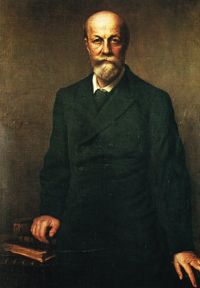
Mór Jókai
Summary
"Tales From Jókai," a collection of stories by Hungarian author Mór Jókai, weaves imaginative narratives steeped in themes of celestial conflict, enchanted objects, and the struggle between human weakness and spiritual determination.
Centered around characters like the rebellious Bar Noemi, the troubled Heinrich, and the mysterious idol Triton, the work explores motifs of creatures, holy relics, and profound challenges through vivid, often surreal episodes. Set against landscapes rich in mythological significance, Jókai’s tales blend religious symbolism with Gothic elements, culminating in a fusion of humanity’s search for purpose amid cosmic and ethical turmoil.
Quotes from Tales From Jókai (Mór Jókai)
“ The proudest and comeliest man that could be found was annually selected and brought into Triton's city. In the midst of the great market-place, the loveliest maidens of the city surrounded him with unpainted cheeks, freely flowing tresses, and elfin garments spun out of glass-thread, and thus they spoke to the elect of the people—"This year thou art the god Tetzkatlepoka, the lord of all beauty, the demi-god of bliss, the prince of women. Every flower blooms for thee, every lip kisses thee. Wilt thou be the god Tetzkatlepoka? Wilt thou consume away, expire, and vanish in the midst of joy?" ”
“ When they reached the gate of the castle, it was not Heinrich's face that was red, but his forehead, and his eyes seemed rather to be green than blue.He saw his father among the deputation. He could easily make him out—one black cassock was very prominent amidst the dazzling-bright Polish parade costumes.He did not wait for the carriage to stop, but leaped from it, and rushed up to the old man, embracing him again and again with great ostentation, and kissing him in the sight of every one. The clergyman did not betray the least emotion. ”
