“ Philippe would not have scrupled to leave Noémi in ignorance. He did not respect her enough to feel that he owed her the truth. But if he was obliged to tell it, he meant to tell it without stopping to consider her. He was a terrible man, terribly without kindness when a passion had seized upon him. Nothing else existed. The love that he had felt for Noémi was that of a master for a valuable slave, and indeed she had never been anything more than this for him. Like many women she had adapted herself to this; when the slave holds the master nothing exceeds her power. ”
Noémi
Definition and stakes
The literary concept of "Noémi" emerges as a multifaceted figure, embodying themes of love, sacrifice, and moral complexity across diverse narratives. Authors such as Romain Rolland depict her as an object of conflicted longing, where passion blurs the boundaries between ownership and dedication, while Eugène Sue portrays her as a sensuous, determined brunette contrasting with more fragile female archetypes.
François Mauriac situates her within spiritual and familial obligations, highlighting her quiet faith and endurance. These varied portrayals—ranging from Rolland’s psychological depth to Jókai’s stories of belief and selflessness—reveal Noémi as a symbol of both human frailty and moral strength, reflecting the cultural and ethical concerns of her literary contexts.
Quotes about “Noémi”
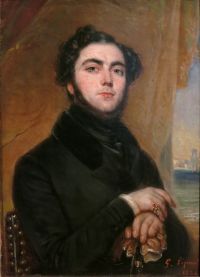
“ Noémi, the brunette, who takes the part of the lover, is manly and resolute, while the poses of the blonde Anathasia are timid, supplicating, and chaste, like those of a young girl who shuns or fears the caresses of her lover. Noémi is tall and slender. Her hair is a golden auburn; her eyebrows and lashes are thick and black, and her eyes are dark gray. Nothing is more voluptuous than those large, liquid eyes. Her brown skin is perhaps rather too dark, and her mocking, sensual lips too brilliantly scarlet, so violently do they contrast with her white teeth; her smile almost too passionate. ”
 François Mauriac,
The kiss to the leper
(1923)
François Mauriac,
The kiss to the leper
(1923)
“ Jean had forbidden Noémi to kiss him, but he gratefully accepted the coolness of her hand upon his forehead. He must have thought that she loved him, for he murmured: "I bless Thee forever, O God, for giving me a woman's love before I die." And, as in the days of his solitary wanderings, he turned the same line over and over again in his mind. Noémi was counting his pulse, and, tired of his rosary, he repeated Pauline's cry in a low voice: Mon Polyeucte touche à son heure dernière. ”