Summary

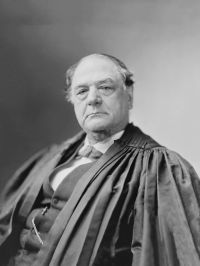
Portrait of Noah Haynes Swayne Noah Haynes Swayne County of St. Clair v. Lovingston…

On a great public highway like the Mississippi, supporting an immense commerce and bearing it to every part of the globe, purchasers must have obtained lands for the beneficial use of the river as well as for the land. Can it be presumed that the United States would make grants of lands bordering upon this river, with its turbulent current, and subject to constant change in its banks by alluvion upon the one side and avulsions upon the other, and then claim all accretion formed by the gradual deposition of sand and soil, and deprive the grantee of his river front?
Source: Wikisource

Portrait of Noah Haynes Swayne Noah Haynes Swayne County of St. Clair v. Lovingston…

If he should lose his entire grant by the washing of the river he must bear the loss, and he should be permitted to enjoy any gain which the ever-varying channel may bring to him. If a great government were to undertake under such circumstances to dispossess its grantee of his river front, the attempt would be akin to fraud, and it would lose the respect to which beneficent laws and the protection of the citizen would entitle it.
Source: Wikisource

Portrait of Noah Haynes Swayne Noah Haynes Swayne County of St. Clair v. Lovingston…

The riparian right to future alluvion is a vested right. It is an inherent and essential attribute of the original property. The title to the increment rests in the law of nature. It is the same with that of the owner of a tree to its fruits, and of the owner of flocks and herds to their natural increase. The right is a natural, not a civil one. The maxim 'qui sentit onus debet sentire commodum' lies at its foundation. The owner takes the chances of injury and of benefit arising from the situation of the property. If there be a gradual loss, he must bear it; if, a gradual gain, it is his.
Source: Wikisource

Get perspective with Kwize: daily news enlightened by great literature