Summary

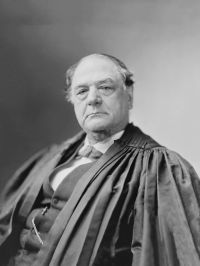
Portrait of Noah Haynes Swayne Noah Haynes Swayne Trist v. Child — Opinion of the Court

If the agent is truthful, and conceals nothing, all is well. If he uses nefarious means with success, the spring-head and the stream of legislation are polluted. To legalize the traffic of such service, would open a door at which fraud and falsehood would not fail to enter and make themselves felt at every accessible point. It would invite their presence and offer them a premium. If the tempted agent be corrupt himself, and disposed to corrupt others, the transition requires but a single step.
Source: Wikisource

Portrait of Noah Haynes Swayne Noah Haynes Swayne Trist v. Child — Opinion of the Court

If the instances were numerous, open, and tolerated, they would be regarded as measuring the decay of the public morals and the degeneracy of the times. No prophetic spirit would be needed to foretell the consequences near at hand. The same thing in lesser legislation, if not so prolific of alarming evils, is not less vicious in itself, nor less to be condemned. The vital principle of both is the same. The evils of the latter are of sufficient magnitude to invite the most serious consideration. The prohibition of the law rests upon a solid foundation.
Source: Wikisource

Portrait of Noah Haynes Swayne Noah Haynes Swayne Trist v. Child — Opinion of the Court

The agreement in the present case was for the sale of the influence and exertions of the lobby agent to bring about the passage of a law for the payment of a private claim, without reference to its merits, by means which, if not corrupt, were illegitimate, and considered in connection with the pecuniary interest of the agent at stake, contrary to the plainest principles of public policy. No one has a right, in such circumstances, to put himself in a position of temptation to do what is regarded as so pernicious in its character.
Source: Wikisource

Get perspective with Kwize: daily news enlightened by great literature