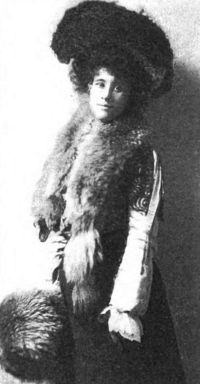
Onoto Watanna

Onoto Watanna

Summary

Portrait of Onoto Watanna Onoto Watanna A Japanese Blossom

Kurukawa, very earnestly, “I would still be in Tokio if it had not been for the children’s letters. They used to come in every mail—little, soiled epistles of love, all bearing their childish pleas for mother to return. Why, I could not stay away from them. They just drew me back.”
Her husband looked at her fondly.
“What a mother you are!” he said.
“Yes,” said she, “that’s my strongest trait—maternity. I love all children. There’s nothing sweeter in the world than baby arms about one’s neck, baby voices, baby kisses, baby touches. Oh, they are the most precious things in life!”
Source: Gutenberg

Portrait of Onoto Watanna Onoto Watanna A Japanese Blossom

After all, he was a true Japanese at heart, for, although father-like, he scarcely dared to think of the possible death of his son, yet he was glad that Gozo was serving the Mikado. All the papers, local and foreign, he could get he read with avidity. Because he knew it would give his wife pain, he read them at night when she was asleep. After a time the father-love was slowly pushed aside for a greater, deeper emotion, the longing to help his country. He was of samurai ancestry, and patriotism was as natural and deep-rooted in him as life itself.
Source: Gutenberg

Portrait of Onoto Watanna Onoto Watanna A Japanese Blossom

Madame Sano came swiftly from the garden-path to meet her, for the news had reached the house in Mrs. Kurukawa’s absence.
Japanese women are not demonstrative, but they are exquisitely tender. The touch of Madame Sano’s hands upon her face was balm itself. The stricken woman’s features quivered. Sobs burst from her lips, and in the other woman’s arms she wept as though she had found the haven of a mother’s breast. Without speaking, Madame Sano led her into the house.
Source: Gutenberg

Get perspective with Kwize: daily news enlightened by great literature