Summary

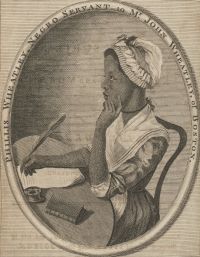
Portrait of Phillis Wheatley Phillis Wheatley Memoir and poems of Phillis Wheatley… (1838)

The groan of the African is not heard among her beautiful hills, nor the whip of the task-master in her pleasant valleys. Would it were thus unto our farthest shores! How can a free people be a slave-holding people? Surely in that social community, where man is claimed as the property of his fellow, the corner-stone of the Temple of Liberty must be laid in the sand; and whither shall we flee when such frail foundation is unsettled?
We have been told of the happiness of the Negro in his bondage
Source: Wikisource

Portrait of Phillis Wheatley Phillis Wheatley Memoir and poems of Phillis Wheatley… (1838)

In a word, all the exertions now made, by the benevolent friends of the African, appear to us likely to produce or suggest, directly or indirectly, a great amount of good, and to promise the early dawning of that bright day, when, in the moral view of his fellow men, no less than of that Creator who has 'made them all of one blood,' the African shall be as the American, and the black man as the white.
Source: Wikisource

Portrait of Phillis Wheatley Phillis Wheatley Memoir and poems of Phillis Wheatley… (1838)

But would the free man change places with the slave? Does he envy his condition? It was said of the peasants of France, in the days of a stern master, that they danced to forget their servitude. Mere animal excitement is the enjoyment of the beasts of the forest and the field, the bird of the air, the fish of the sea, and the million insect tribes, sporting in every sun-beam; but this is not the happiness of man.
Source: Wikisource

Get perspective with Kwize: daily news enlightened by great literature