Summary

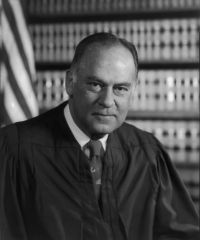
Portrait of Potter Stewart Potter Stewart Ingram v. United States — Opinion of the Court

The opinion of the Court convincingly demonstrates why the evidence in the case does not support a finding by the jury that petitioners Smith and Law knew that a tax was owing by petitioners Ingram and Jenkins, and that they undertook acts of concealment for the purpose, in whole or in part, of aiding an evasion of that tax.
But I think that the very considerations which lead the Court to reverse the conviction of Smith and Law equally require a reversal as to Ingram and Jenkins. An indispensable element of the crime of tax evasion is knowledge that a tax is imposed.
Source: Wikisource

Portrait of Potter Stewart Potter Stewart Ingram v. United States — Opinion of the Court

United States, 319 U.S. 703, 711, 63 S.Ct. 1265, 1269, 87 L.Ed. 1674.
' (C) onspiracy to commit a particular substantive offense cannot exist without at least the degree of criminal intent necessary for the substantive offense itself.' [9] The substantive offense which Smith and Law were accused of conspiring to commit was the willful evasion of federal taxes, an offense which, even presuming knowledge of the tax law, obviously cannot be committed in the absence of knowledge of willfulness.
Source: Wikisource

Portrait of Potter Stewart Potter Stewart Ingram v. United States — Opinion of the Court

United States, 336 U.S. 440, 69 S.Ct. 716, 93 L.Ed. 790, do not, as petitioners appear to contend, prevent the jury from treating this subsidiary objective as an element of the conspiracy. Those cases hold only that the life of the conspiracy cannot be extended by evidence of concealment after the conspiracy's criminal objectives have been fully accomplished.
Source: Wikisource

Get perspective with Kwize: daily news enlightened by great literature