Summary

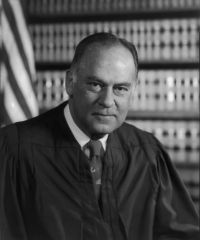
Portrait of Potter Stewart Potter Stewart Machibroda v. United States — Opinion of the Court

More is not required; the court has nothing to do but give judgment and sentence. Out of just consideration for persons accused of crime, courts are careful that a plea of guilty shall not be accepted unless made voluntarily after proper advice and with full understanding of the consequences.' Kercheval v. United States, 274 U.S. 220, 223, 47 S.Ct.
Source: Wikisource

Portrait of Potter Stewart Potter Stewart Machibroda v. United States — Opinion of the Court

The language of the statute does not strip the district courts of all discretion to exercise their common sense. Indeed, the statute itself recognizes that there are times when allegations of facts outside the record can be fully investigated without requiring the personal presence of the prisoner. [4] Whether the petition in the present case can appropriately be disposed of without the presence of the petitioner at the hearing is a question to be resolved in the further proceedings in the District Court.
There will always be marginal cases, and this case is not far from the line.
Source: Wikisource

Portrait of Potter Stewart Potter Stewart Machibroda v. United States — Opinion of the Court

The court further noted that the petitioner had not complained when no request for a reduction of sentence was made by the United States Attorney within sixty days after sentencing, and that instead, the petitioner had waited almost two and a half years to file the present motion.
There can be no doubt that, if the allegations contained in the petitioner's motion and affidavit are true, he is entitled to have his sentence vacated. A guilty plea, if induced by promises or threats which deprive it of the character of a voluntary act, is void.
Source: Wikisource

Get perspective with Kwize: daily news enlightened by great literature