Summary

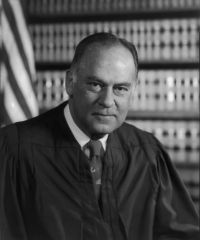
Portrait of Potter Stewart Potter Stewart Quantity of Copies of Books v. Kansas…

The operation of the Kansas statute resembles the operation of a penal, rather than a licensing, law in this regard, since books are not, as a matter of course, subjected to prepublication state sanctioning, but are reviewed only when the State has reason to believe they are obscene.
There are built-in elements in any system of licensing or censorship the tendency of which is to encourage restrictions of expression. The State is not compelled to make an initial decision to pursue a course of action, since the original burden is on the citizen to bring a piece of writing before it.
Source: Wikisource

Portrait of Potter Stewart Potter Stewart Quantity of Copies of Books v. Kansas…

In a criminal proceeding, however, the burden is on the State to act, the decisionmaker belongs to an independent branch of the government, and neither a judge nor a juror has any personal interest in active censorship. The Kansas practice is thus analogous to a system of penal sanctions, rather than censorship, in all three of these respects.
One danger of a censorship system is that the public may never be aware of what an administrative agent refuses to permit to be published or distributed.
Source: Wikisource

Portrait of Potter Stewart Potter Stewart Quantity of Copies of Books v. Kansas…

A penal sanction assures both that some overt thing has been done by the accused and that the penalty is imposed for an activity that is not concealed from the public. In this case, the information charged that obscene books were possessed or kept for sale and distribution; presumably, such possession, if knowing, could, as a constitutional matter, support a criminal prosecution. The procedure adopted by the State envisions that a full judicial hearing will be held on the obscenity issue.
Source: Wikisource

Get perspective with Kwize: daily news enlightened by great literature