Summary

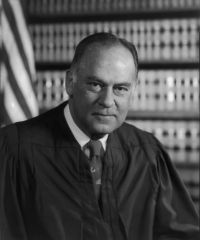
Portrait of Potter Stewart Potter Stewart Sierra Club v. Morton — Opinion of the Court

Less familiar, however, is De Tocqueville's further observation that judicial review is effective largely because it is not available simply at the behest of a partisan faction, but is exercised only to remedy a particular, concrete injury. "It will be seen, also, that, by leaving it to private interest to censure the law, and by intimately uniting the trial of the law with the trial of an individual, legislation is protected from wanton assaults and from the daily aggressions of party spirit. The errors of the legislator are exposed only to meet a real want
Source: Wikisource

Portrait of Potter Stewart Potter Stewart Sierra Club v. Morton — Opinion of the Court

The trend of cases arising under the APA and other statutes authorizing judicial review of federal agency action has been toward recognizing that injuries other than economic harm are sufficient to bring a person within the meaning of the statutory language, and toward discarding the notion that an injury that is widely shared is ipso facto not an injury sufficient to provide the basis for judicial review.
Source: Wikisource

Portrait of Potter Stewart Potter Stewart Sierra Club v. Morton — Opinion of the Court

We do not question that this type of harm may amount to an "injury in fact" sufficient to lay the basis for standing under § 10 of the APA. Aesthetic and environmental wellbeing, like economic wellbeing, are important ingredients of the quality of life in our society, and the fact that particular environmental interests are shared by the many, rather than the few, does not make them less deserving of legal protection through the judicial process. But the "injury in fact," test requires more than an injury to a cognizable [p735] interest.
Source: Wikisource

Get perspective with Kwize: daily news enlightened by great literature