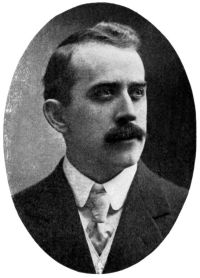
Ralph Vary Chamberlin

Ralph Vary Chamberlin

Summary

Portrait of Ralph Vary Chamberlin Ralph Vary Chamberlin The Early Hebrew Conception of the Universe (1909)

Truth, then, cannot be given to us from without; we attain it, make it ours, only as we work it out and build it up within our minds. Evidently, too, the nature and degree of truth reached by us must depend intimately upon the interpretations accepted by the people among whom we live and received by us in our social heritage and upon the additional facts of our own personal experience. We can construct truth no higher than the suitability and amount of materials in our mental possession permit.
Source: Wikisource

Portrait of Ralph Vary Chamberlin Ralph Vary Chamberlin The Early Hebrew Conception of the Universe (1909)

Those who in the reading of the Old Testament thus fail to gain at the outset some understanding of the world in which the early Hebrews lived and of the conceptions which they held, understand but imperfectly and, of necessity, fail very largely in estimating justly the value of the books. For, assuredly, it is only as We perceive the, constant" growth, the consistent evolution, in the Bible and recognize in it the progressive unfolding of the divine—the spiritual and divine in the Hebrew-race that it has its highest meaning for us and can teach and stimulate us.
Source: Wikisource

Portrait of Ralph Vary Chamberlin Ralph Vary Chamberlin The Early Hebrew Conception of the Universe (1909)

Knowledge, ordinary as well as well as scientific, is possible only when facts are grouped under hypotheses or theories, which are mental reconstructions arrived at by reflection upon the suggestive materials brought to us through sensation. When an interpretation satisfies all conscious minds capable of grasping it and at the same time accords with the body of interpretations already accepted by the race, then only is it properly to be received as truth.
Source: Wikisource

Get perspective with Kwize: daily news enlightened by great literature